
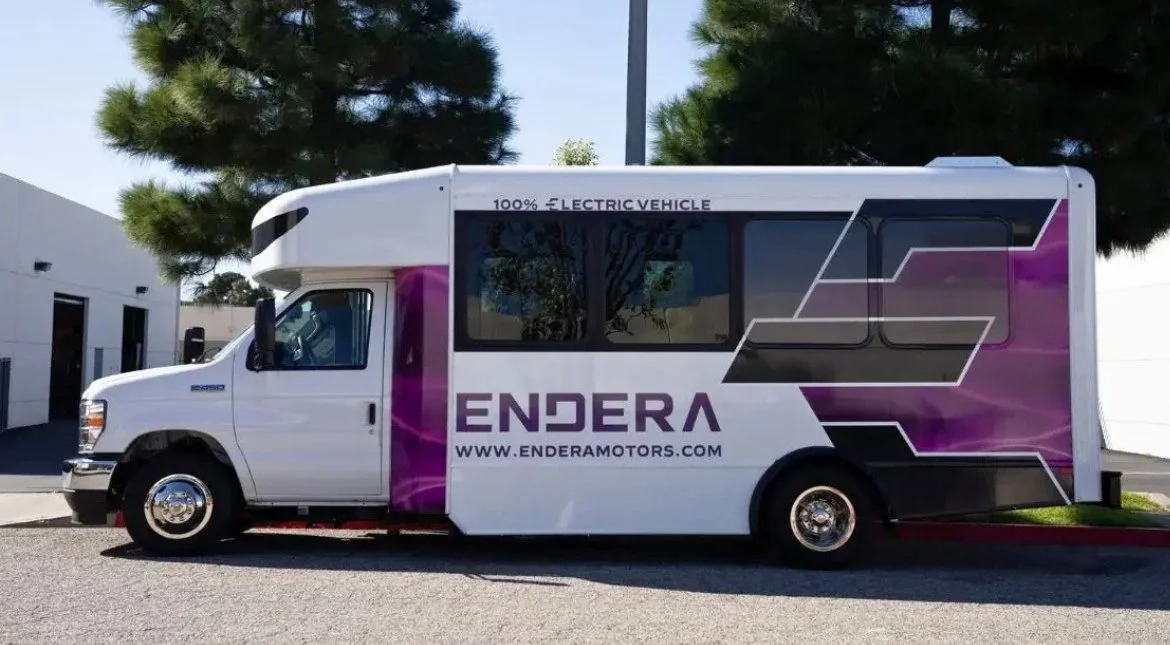
Transportation Is Part of What a Winery Experience Delivers
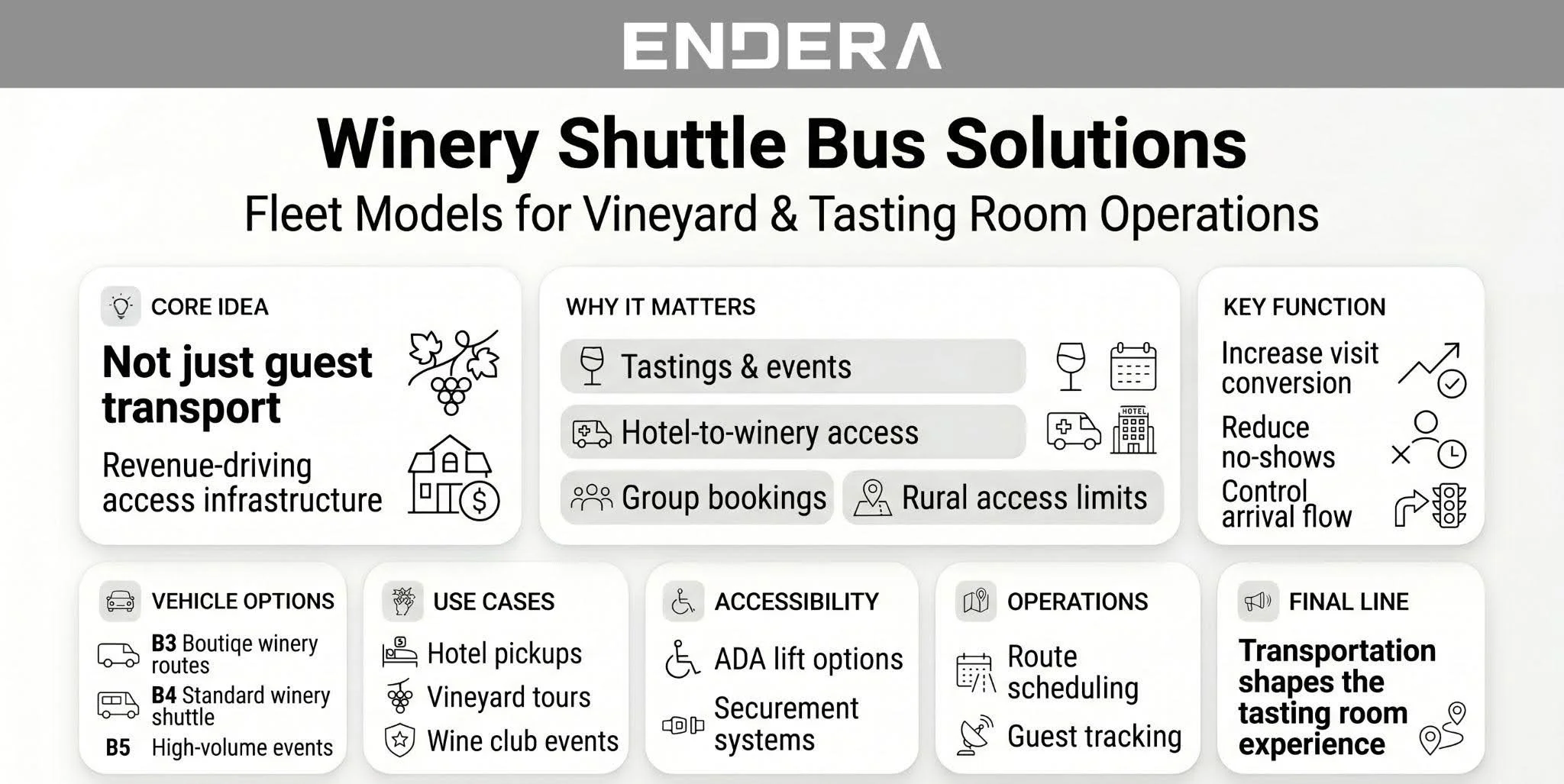
The Shuttle Is Revenue Infrastructure, Not an Amenity
Winery transportation is most often positioned as a convenience layer or hospitality enhancement. That framing misses a more consequential reality: winery shuttle systems function as revenue infrastructure that directly determines how much demand a property can actually convert into visits and sales. Many wineries attract interest through digital marketing and hotel partnerships, but lose potential guests at the point where rural access, driving logistics, or group coordination becomes a barrier — creating what is effectively a transport-to-experience conversion gap.
Closing the Conversion Gap
A dedicated shuttle program closes that gap by turning transportation into controlled throughput infrastructure. Instead of relying on guests to self-navigate rural roads, wineries can actively shape arrival volume, timing, and group composition. This directly increases daily tasting capacity utilization and expands catchment radius beyond self-driving visitors. Wine tourism research consistently identifies accessibility and infrastructure as the primary constraints on rural wine destination conversion, even when regional demand is strong.
The Economics of Group Visitation
A shuttle program also changes the economics of group visitation. Events, club releases, and private tastings become more viable when transportation is bundled into the experience rather than outsourced or left to guest coordination. The result is higher predictability of attendance and reduced no-show friction in booking funnels — outcomes that affect revenue directly, not just guest experience scores.
Why Winery Operators Are Choosing Fleet Ownership
Contracted shuttle services offer flexibility for occasional use, but operators running consistent tasting room programs, event transportation, and hotel-to-property routes find that ownership gives them control a contractor can't replicate. Schedule flexibility, branding, and driver management are all compromised when the vehicle belongs to someone else. Endera builds the B-Series commercial shuttle line in configurations that fit the scale, aesthetic, and operational profile of winery and vineyard operations — with ICE, propane, CNG, and electric powertrain options and integrated fleet software that supports both the operator and the guest.
Running hotel-to-property routes, vineyard tours, or event transport — or all three? Endera's team can help you find the right configuration for your property's routes and guest experience standards.
How Winery and Vineyard Transportation Programs Are Structured
Hotel-to-Tasting Room Routes
The most common winery shuttle route is the hotel-to-property run — picking guests up from accommodation clusters, nearby towns, or regional transit points and delivering them to the tasting room. These routes run on a defined schedule tied to tasting room opening times, reservation windows, and event start times. They are predictable enough to manage with a small fleet and high enough in guest visibility to justify a vehicle that presents well.
Vineyard Block and Property Tours
Larger vineyard properties use shuttles to move guests between the tasting room, vineyard blocks, barrel rooms, and processing facilities as part of an immersive tour experience. These on-property routes are short, slow-speed, and highly visible — the vehicle is part of the experience rather than simply a means of getting from one place to another. An electric shuttle on a vineyard property tour delivers a quieter, smoother ride that lets guests hear the guide, see the landscape, and experience the property without diesel noise or exhaust in the middle of it.
Event and Private Group Transport
Winery events — harvest dinners, wine club release weekends, private buyouts, corporate retreats — generate concentrated group transportation demand that differs from regular tasting room traffic. A group of 20 to 40 guests arriving for a private event needs a vehicle that can handle the load in one or two runs, presents appropriately for the event's tone, and is available when the event schedule requires rather than when a contracted provider happens to be free. Owning the vehicle gives the property direct control over that schedule.
Multi-Winery Route Programs
Wine regions with multiple properties in proximity — Napa, Sonoma, Paso Robles, the Finger Lakes, the Willamette Valley — have seen growth in coordinated shuttle programs where a winery or association operates a shared route between participating properties. These programs serve as a guest acquisition tool as much as a transportation service, keeping the driving decision off the table while exposing visitors to the full region.
The Endera B-Series for Winery and Vineyard Operations
B3: Boutique Properties and Targeted Routes
The B3 at 23 feet is the right answer for boutique wineries, smaller tasting room operations, and properties where average group size is consistently in the lower range. A vehicle sized for 10 to 14 passengers that fits the scale of the operation — and the scale of the property's access roads — is more appropriate than a larger bus that signals operational overhead the property doesn't have.
B4: The Standard for Most Winery Shuttle Programs
The B4 at 24 feet covers the broadest range of winery and vineyard use cases — hotel-to-property routes, event transport, vineyard tours, and multi-winery runs. It is available in both ICE and electric powertrains, handles the capacity requirements of most private group sizes, and fits the access road widths and parking configurations of most established wine country properties. In most states, the B4 can be operated without a CDL depending on configuration — a staffing flexibility advantage for properties that need to deploy a driver from existing hospitality staff rather than hire a separate CDL-credentialed operator.
B5: Higher Capacity for Larger Properties and Events
The B5 at 25 feet handles higher passenger loads for larger tasting room operations, full-property events, and wine club programs where group sizes consistently exceed what a B4 can carry in a single run. It is available in both ICE and electric variants. For properties hosting regular events of 25 to 40 guests with hotel shuttle needs, the B5 reduces the number of separate vehicle runs required without stepping up to a full-size charter bus that may be difficult to stage on a rural vineyard property.
Electric Shuttle Options for Sustainable Vineyard Operations
Why Electric Fits Winery Brand Values
Sustainability is central to how most wineries present themselves — organic farming practices, water conservation, carbon footprint reduction, and land stewardship are standard parts of the brand narrative for properties across every major wine region. An electric shuttle is a visible, operational expression of that commitment. It runs silently through the vineyard, produces no emissions at the point of use, and can be prominently featured in the property's marketing as a tangible sustainability investment rather than a statement of intent.
Route Profiles Well-Suited to Electric
Hotel-to-tasting room routes and on-property vineyard tours have distance and cycle profiles that suit electric powertrains well. The routes are short, the vehicles return to the property between runs, and charging can be managed during gaps between tour groups or tasting reservations. For properties with existing solar installations — common among sustainability-forward wineries — charging from on-site generation creates a complete loop that supports both the environmental story and the operating budget.
Charging Infrastructure for Vineyard Properties
Endera provides turnkey charging infrastructure alongside its electric vehicles — site assessment, charger procurement, and installation. For winery properties without existing commercial EV infrastructure, this means the vehicle and the charging setup come from the same vendor relationship rather than requiring a separate infrastructure project. DC fast charging is standard across Endera's electric lineup, supporting turnaround requirements on hotel runs that need a vehicle ready for multiple daily pickups.
A Winery Shuttle Program Should Match the Experience the Property Delivers
The standard a winery sets in the cellar and the tasting room extends to every touchpoint in the guest experience — including the vehicle that carries guests to and from the property. A shuttle program built on a well-maintained, appropriately sized vehicle with live tracking for guests and reliable software for the operations team reflects the same intentionality that goes into the wine itself. Endera's B-Series is built for the appearance standards, route profiles, and sustainability commitments of winery and vineyard operations — as a complete system covering the vehicle, the software, and the charging infrastructure.
Talk to Endera's sales team about which B-Series configuration fits your property's routes, group sizes, and brand positioning — and what's currently available for your program.
Frequently Asked Questions
Which Endera B-Series model is best for a winery shuttle program?
The B4 at 24 feet covers the broadest range of winery use cases — hotel-to-property routes, event transport, and vineyard tours. It is available in ICE and electric powertrains and fits the access road widths and parking configurations of most wine country properties. Boutique properties with consistently smaller group sizes may prefer the B3. Larger tasting room operations and event-heavy properties may prefer the B5 for its higher capacity per run.
Does Endera offer electric winery shuttle buses?
Yes. The B4 and B5 are both available in electric variants. Endera also provides turnkey charging infrastructure — site assessment, charger procurement, and installation — as part of its EV offering. For wineries with existing solar installations, the combination of on-site generation and an electric shuttle creates a complete sustainable transport loop that supports both environmental goals and operating budgets.
Do winery shuttle drivers need a CDL?
CDL requirements depend on vehicle passenger capacity and vary by state. Endera's B3, B4, and B5 models are configurable to stay below CDL thresholds in most states, which allows winery properties to deploy existing hospitality staff as shuttle drivers rather than hiring a separate CDL-credentialed operator. The specific configuration and applicable state requirement should be confirmed with the Endera sales team before finalizing an order.
What insurance does a winery need for a passenger shuttle program?
Vehicles carrying passengers — even as a complimentary service — are subject to commercial auto liability requirements that differ from standard business vehicle coverage. Winery operators should confirm specific requirements with their insurance carrier before procurement. A vehicle built to commercial safety standards, operated by a qualified driver, and maintained with documented service records is in a stronger position in the event of an incident than one without that documentation.
Can Endera configure a winery shuttle with custom exterior branding?
Yes. Endera's B-Series supports custom exterior livery, allowing winery and vineyard properties to align the vehicle's appearance with their label design, brand colors, and overall guest experience aesthetic. Custom branding options should be discussed with the Endera sales team during the specification process.
Does Endera's software support guest-facing shuttle tracking for wine country routes?
Yes. Endera Go provides guests with real-time vehicle location and precise ETAs through a mobile app powered by onboard vehicle technology and Google API. For guests coordinating a hotel pickup or a return run after a tasting, live shuttle tracking is a meaningful service improvement over a scheduled time that doesn't account for real-world conditions on rural wine country roads.
Can a winery use an Endera shuttle for both on-property vineyard tours and hotel-to-property routes?
Yes. The B-Series floor plan is configurable to serve both use cases — standard passenger seating for hotel runs and group transport, with options for tour-appropriate interior layouts for on-property vineyard experiences. Properties running both functions from the same vehicle should discuss the configuration with the Endera sales team to confirm the floor plan fits both operational requirements.