
Kentucky's commercial shuttle market draws from a wider range of industries than its population size suggests. Louisville's airport and hospitality infrastructure, Lexington's university and horse industry corridors, a significant manufacturing base spread across the state's mid-section, and rural county transit systems serving residents who depend on demand-response transport for healthcare and employment — all of these generate fleet purchasing activity with different vehicle requirements and operational profiles.
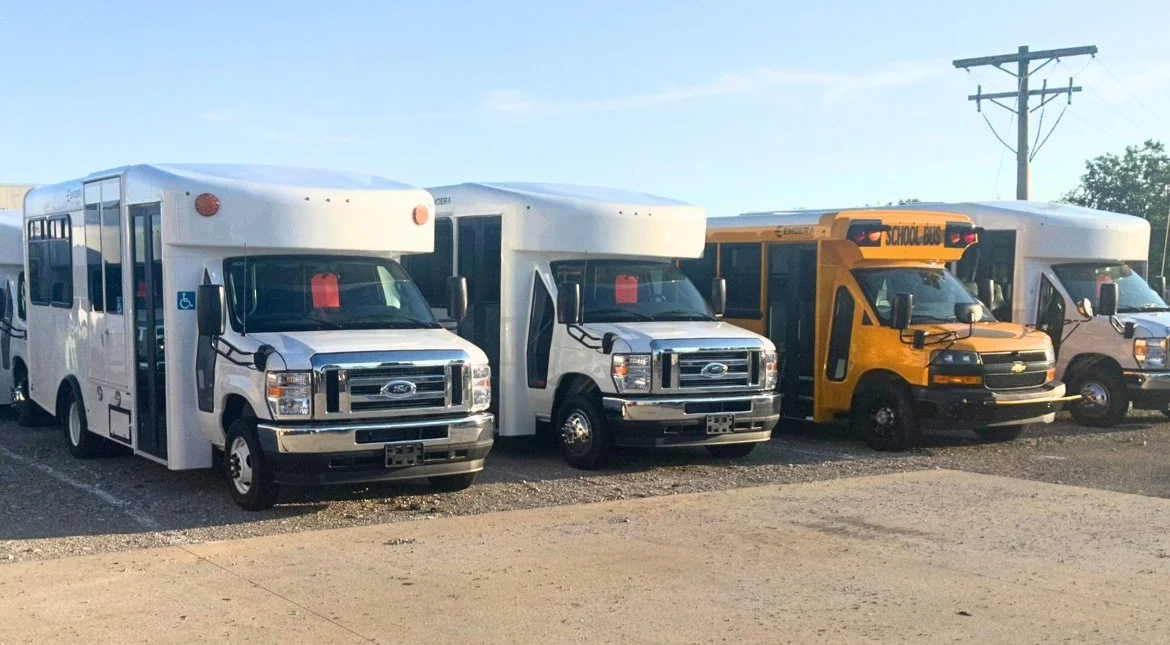
Endera manufactures Class 4 B-Series commercial shuttles in ICE, propane, CNG, and full-electric configurations on Ford E450 and Chevrolet Express cutaway chassis. For Kentucky hotels, airports, universities, healthcare systems, manufacturing campuses, and rural transit operators, the B-Series is purpose-built for the daily cycle counts and passenger volumes that van-based alternatives can't sustain under commercial load.
Ready to spec your fleet? Contact Endera's fleet specialists today to design a custom configuration blueprint for your operation.

Kentucky Shuttle Use Cases: Where the B-Series Fits
Kentucky's shuttle demand spans a range of distinct markets with different operational requirements and procurement structures.
Airports, Hotels, and Tourism Transportation
Louisville Muhammad Ali International and Lexington Blue Grass Airport both support parking and hotel shuttle operations requiring high-frequency fixed-route vehicles. Kentucky's bourbon trail, horse racing venues at Churchill Downs and Keeneland, and the growing convention infrastructure in Louisville generate event and hospitality transportation demand alongside standard airport circuits. The U.S. Travel Association's travel data and federal tourism transportation planning resources both reflect how shuttle connectivity shapes visitor experience in tourism-dependent markets like Kentucky's.
The B4 handles airport hotel loops and tourism circuits efficiently. For higher-volume event transportation — Kentucky Derby week, major conventions, bourbon trail group tours — the B5 and B8 provide the passenger capacity that smaller models can't match.
Universities and Campus Transportation
The University of Kentucky's paratransit operations illustrate how large campus systems combine ADA-accessible shuttle programs with broader student mobility services. Western Kentucky University's Topper Transit and the GO bg Transit system in Bowling Green demonstrate how Kentucky university communities integrate campus and community transit — creating consistent demand for mid-size commercial shuttles across multiple institutional buyer profiles. Endera's Endera Dispatch software provides AI-powered routing and real-time GPS tracking suited to multi-stop campus and community operations.
Healthcare and Senior Transportation
Kentucky's healthcare transportation gap is documented and significant. Central Kentucky Community Action Transportation operates shuttle systems transporting passengers to medical appointments, therapy, pharmacies, and senior centers. Foothills Community Action transportation services provide medical transport and workforce mobility in rural communities. The NADTC aging and disability transportation data documents consistent growth in this demand segment — driven by demographics, not policy cycles.
Manufacturing and Workforce Transportation
Kentucky's manufacturing base — Toyota's Georgetown plant, Ford operations in Louisville, and the broader automotive supplier ecosystem — generates shift-based workforce transportation demand. Employee shuttles between parking facilities, transit hubs, and production facilities run on tight schedules with high turnover requirements. BLS Kentucky workforce statistics reflect the industrial employment concentration that drives this shuttle market segment in central and north-central Kentucky.
Kentucky Rural Transit: A Different Operational Profile
Kentucky's rural transportation program resources support transit operators across the state's rural counties — systems that serve residents with no alternative transport access. Kentucky's public transit network provides approximately 31 million passenger trips annually, including millions of trips for elderly and disabled residents who depend on demand-response and paratransit services for basic mobility.
Daniel Boone Community Action Agency transportation services and similar regional programs illustrate the intercity and rural shuttle operations that connect Kentucky residents to airports, healthcare facilities, and regional transit hubs. These operators need vehicles that combine ADA accessibility, operational flexibility, and durability on routes that vary daily — requirements the B3 and B4 serve well on ICE or propane configurations.
Parish and County Fleet Funding
Federal FTA Section 5310 funding and state rural transportation program grants provide the procurement pathway that Kentucky rural transit operators access for fleet replacement. Endera's B-Series shuttles are FTA-eligible and Buy America compliant — meeting the federal procurement requirements attached to Section 5310 and related rural mobility funding. Endera's grant navigation services help Kentucky operators identify applicable programs and manage applications alongside procurement.
What Sets the B-Series Apart for Kentucky Commercial Operators
Kentucky fleet buyers — particularly in manufacturing and university environments — evaluate commercial vehicles the way procurement professionals do: total cost of ownership, maintenance burden, warranty accountability, and platform standardization across a fleet. A vehicle that performs well in year one but requires fragmented service relationships and split warranty coverage creates operational overhead that compounds over a 10-to-12-year service life.
Endera is the only American vertically integrated OEM for Class 4 electric shuttles — body assembly and powertrain installation handled at the same Ottawa, Ohio facility. That integration produces one warranty document, one compliance certification, and one point of service contact for any post-sale issue.
Parts Availability Across Urban and Rural Kentucky
The B-Series is built on Ford E450 and Chevrolet Express cutaway chassis — platforms with broad parts availability and technician familiarity across Kentucky's urban and rural service areas. For operators in Hazard, Paducah, or Hopkinsville where specialized service infrastructure may be limited, chassis serviceability through the national Ford and GM commercial networks is a practical procurement consideration that matters as much as the vehicle's initial specifications.
The B-Series Lineup for Kentucky Fleets
| Model | Length | Fuel Options | Best Fit |
|---|---|---|---|
| B3 | 23 ft | ICE | Rural transit, church transport, community programs |
| B4 | 24 ft | ICE & EV | Airport shuttles, campus loops, healthcare transport |
| B5 | 25 ft | ICE & EV | Employee transport, convention, higher-capacity routes |
| B8 | 28 ft | ICE | High-volume event, industrial, group transport |
ADA-configured flat-floor models with 800 lb Braun lifts are available across the lineup, meeting ADA accessible transportation requirements and FTA Part 37 transportation service regulations as delivered.
Electric vs. ICE for Kentucky Fleets
Kentucky's mild climate removes most cold-weather EV concerns for central and western parts of the state — battery performance is more predictable year-round than in northern markets. Fixed-route airport, campus, and healthcare operations with overnight depot charging are the strongest EV candidates.
For rural operators with long irregular routes, manufacturing campuses with variable daily mileage, or facilities without charging infrastructure, ICE or propane configurations remain the current-cycle solution. Propane reduces fuel costs 30–40% versus gasoline per DOE Alternative Fuels Data Center data and qualifies for clean fuel programs that diesel replacements typically cannot access. All B-Series configurations share the same platform — standardizing on Endera now doesn't foreclose an EV transition on the next procurement cycle.
ADA Accessibility for Kentucky Transit and Healthcare Fleets
Kentucky transit agencies, healthcare operators, and community transportation programs must meet ADA accessible transportation requirements and FTA Part 37 regulations. The Paducah transit paratransit program and TANK paratransit operations illustrate how Kentucky transit systems operate lift-equipped demand-response services under ADA compliance obligations.
Endera's flat-floor B-Series configurations include 800 lb Braun ADA lifts installed at the manufacturing stage. For Kentucky NEMT operators, rural transit agencies, and senior living communities, OEM-installed equipment provides unified warranty coverage and cleaner compliance documentation than post-sale retrofits.
Ready to Spec a Shuttle for Your Kentucky Fleet?
Several 2026 B-Series units are available for immediate delivery through Endera Stock, including ADA-configured flat-floor models and standard passenger layouts. For operators working within formal procurement or grant-aligned purchasing cycles, Endera provides full specification documentation, Buy America compliance materials, and grant application support.
Contact Endera's fleet specialists to discuss fleet configuration, powertrain options, or financing for your Kentucky operation.
Frequently Asked Questions
What B-Series configuration works best for Kentucky airport and tourism operations?
The B4 (24 ft) handles Louisville and Lexington airport hotel loops and bourbon trail tourism circuits efficiently. For higher-volume events — Kentucky Derby week, Keeneland race meets, major conventions — the B5 or B8 provides the passenger capacity that the B4 can't match. Electric B4 models suit fixed-route airport and campus operations well given overnight depot charging availability.
Are there funding programs for Kentucky rural transit and community fleet purchases?
Yes. FTA Section 5310 funds accessible vehicle purchases for operators serving seniors and people with disabilities. Kentucky's rural transportation program provides state-level support for rural fleet replacement. Federal FTA Bus and Bus Facilities grants are accessible to qualifying transit agencies. Endera's B-Series is FTA-eligible and Buy America compliant — Endera's grant navigation services help identify applicable programs.
What ADA accessibility options are available for Kentucky fleet operators?
Flat-floor B-Series configurations include 800 lb Braun ADA lifts installed at the manufacturing stage, meeting FTA Part 37 requirements. For Kentucky NEMT operators, paratransit agencies, and senior living communities, OEM-installed equipment provides unified warranty coverage and stronger compliance standing than post-sale retrofits.
How does the B-Series serve Kentucky's rural county and demand-response transit operators?
ICE and propane B-Series configurations serve rural demand-response operations well — broad parts availability, no charging infrastructure dependency, and ADA-configured models for accessible transport. The B3 and B4's compact footprint handles county road approaches and tight rural facility turnarounds more efficiently than full-size buses.
Are electric shuttle buses practical for Kentucky fleet operations?
Yes, for fixed-route urban operations. Kentucky's mild climate makes battery performance predictable year-round for Louisville, Lexington, and Bowling Green operators. Airport hotel loops, university campus circuits, and healthcare transport with overnight depot charging are the strongest EV candidates. Rural operators with long routes or no charging infrastructure should consider ICE or propane as the current-cycle solution.
Can the B-Series handle Kentucky's manufacturing and workforce transportation requirements?
Yes. The B4 and B5 handle shift-based employee transport efficiently — ADA-configured, commercially rated for daily multi-shift cycles, and available in electric for campuses aligned with sustainability commitments. Kentucky's automotive manufacturing corridor generates consistent employee shuttle demand that purpose-built commercial chassis serve more reliably than repurposed passenger vans.
Do B-Series shuttle buses require a CDL in Kentucky?
Most B-Series configurations fall below the federal CDL threshold — under 26,001 lbs GVWR and fewer than 16 passengers including the driver. Kentucky operators running for-hire commercial transport should confirm state-specific licensing requirements, as for-hire passenger carrier rules may add licensing layers beyond the standard federal CDL threshold.