
Oklahoma school districts face a procurement environment shaped by wide geographic spread, extreme weather in both directions, and a state funding structure that puts most of the financial decision-making squarely at the district level. There's no statewide electrification mandate pushing timelines, and state-level EV incentive programs are more limited than in coastal markets. What Oklahoma districts do have access to is federal funding — and for districts that qualify, that changes the math on electric buses considerably.
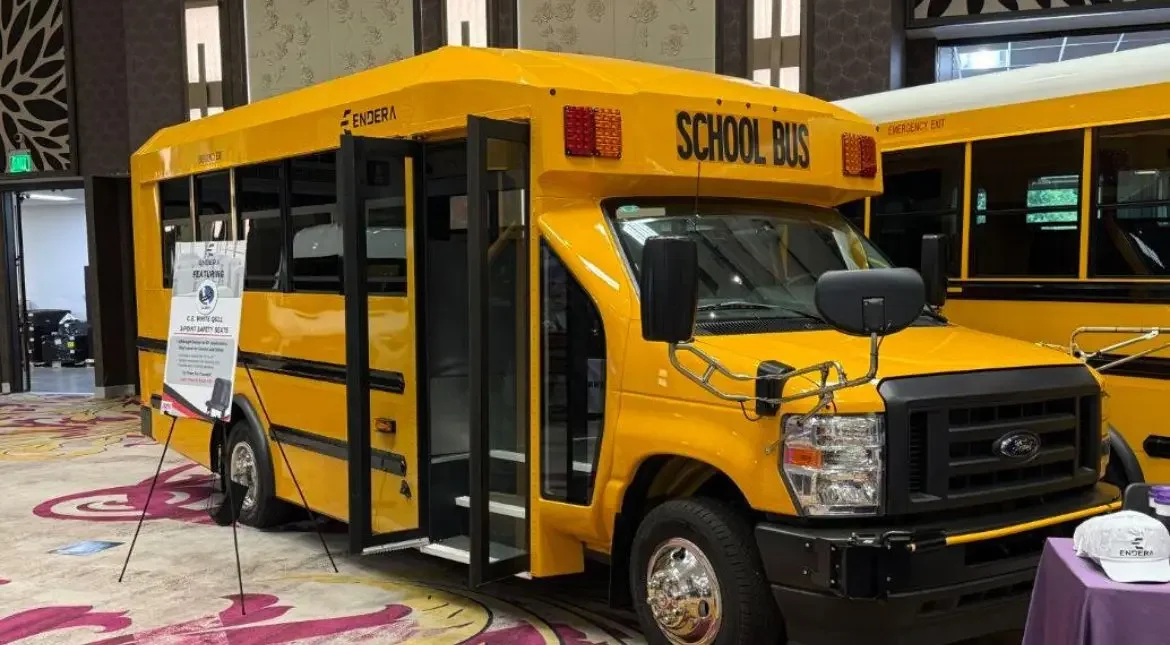
Endera's Type A school buses — the Endera 4, 5, and 6 — are available in ICE, propane, CNG, and full electric configurations, built to handle the operational demands Oklahoma routes actually place on vehicles. From Tulsa suburban special education routes to long rural runs in the Panhandle, the lineup covers the range of conditions Oklahoma transportation directors deal with every day.
Federal funding won't wait for your district to catch up — talk to an Endera specialist today to find out what your district qualifies for.

Oklahoma's School Bus Landscape: What Shapes the Decision
No State Mandate, But Federal Funding Is Real
Oklahoma has no statewide school bus electrification requirement, which gives districts more flexibility in their fuel and vehicle choices than mandate-driven states. That flexibility is genuine — but it also means districts have to make the financial case for electrification on their own terms rather than leaning on a compliance deadline.
The EPA Clean School Bus Program is the primary federal mechanism available to Oklahoma districts, and it applies regardless of state policy. For districts that qualify — particularly Title I schools and rural systems, which represent a significant share of Oklahoma's district landscape — the program can substantially offset the upfront cost of going electric.
Oklahoma Routes Vary More Than Most States
Oklahoma's geography creates a wider range of transportation demands than most states its size. Urban and suburban districts in Oklahoma City and Tulsa run shorter, more defined routes well suited to electrification. Districts in rural western Oklahoma and the Panhandle cover longer distances with fewer backup vehicles and less access to commercial charging infrastructure. That variability means there's no single right answer for Oklahoma — the right fuel type depends heavily on where the district operates and what its routes actually look like day to day.
What Oklahoma Districts Actually Pay: Funding Reality
The EPA Numbers for Oklahoma Districts
The EPA Clean School Bus Program is frequently referenced as a reason to go electric — but what matters is what lands on the balance sheet after awards, requirements, and timing constraints are applied. For priority districts — including Title I schools and rural systems, categories that cover a meaningful portion of Oklahoma — EPA rebates can reach $245,000–$325,000 per electric bus, including charging infrastructure.
Non-priority districts typically receive less, often in the $115,000–$170,000 range. Propane and CNG buses are also eligible, but at significantly lower funding levels — typically $20,000–$45,000 depending on size and eligibility.
The Conditions That Come With the Funding
Accessing EPA funding comes with real requirements. Districts must scrap an existing bus to qualify — typically a 2010 or older diesel unit — and buses cannot be ordered before official award notification.
The sequence is fixed: award → purchase order → delivery → deployment. That timeline has real implications for Oklahoma districts working within annual budget cycles and school-year planning windows. Endera's grant advisory team helps districts understand where they fall in that eligibility matrix before procurement begins — not after a commitment has already been made.
| Scenario | Electric Bus | Propane Bus | ICE Bus |
|---|---|---|---|
| Priority district with funding | Highest upfront → lowest net cost | Moderate discount | No funding |
| Non-priority district | Reduced but still higher net cost | Small discount | Lowest upfront |
| With ADA lift add-on | + up to $20K covered | + up to $20K covered | Not subsidized |
Procurement and Funding Timeline Reality in Oklahoma
The EPA Process Is Sequential — and That Matters
The EPA Clean School Bus Program is often presented as a straightforward funding opportunity. In practice, the timeline structure introduces real operational risk that Oklahoma districts need to plan around. Federal guidance makes clear that the process is fixed and sequential: districts must apply, wait for selection, and only after official award notification can they place a purchase order. Ordering earlier disqualifies the purchase from funding entirely.
The full chain looks like this: application → selection → purchase order → delivery → bus replacement and close-out. Each step introduces potential delays, and since funding rounds are annual and competitive, districts are not guaranteed an award in any given cycle.
What This Means for Oklahoma School-Year Planning
For Oklahoma districts, school-year timelines create a planning gap manufacturers often overlook. A district may apply in spring, receive funding in fall, and place an order soon after, but delivery can slip into the next school year. This can force overlap with existing fleets or delay deployment. EPA scrappage rules add further timing pressure, requiring old buses to be retired in sync with new deliveries. As a result, EPA funding becomes as much about scheduling as financing, and planning a year ahead is key to avoiding service disruptions.
The Endera Type A Lineup for Oklahoma Schools
Three Models, Configured for Oklahoma Needs
The Endera 4, 5, and 6 cover 14 to 30 passengers across 4 to 6 section configurations, with options for standard seating, ADA-compliant wheelchair lifts, and storage layouts suited to special education and general student transport.
Special education routes are among the most common Type A use cases across Oklahoma's rural districts — and the configurability of Endera's lineup, driven by its vertically integrated manufacturing process, means districts can specify exactly the floor plan and accessibility features their students require. Both Ford and Chevrolet cutaway chassis are available, giving districts flexibility in procurement and ongoing service relationships with local dealers.
Safety Engineering That Doesn't Compromise
Every Endera Type A exceeds the highest industry standards for structural integrity and student protection. Because Endera designs and builds the powertrain and body under one roof at its Ottawa, Ohio facility, safety engineering is built into the vehicle from the start — not applied by a third-party body shop at the end of a fragmented assembly process. For Oklahoma districts where a single Type A bus may carry medically fragile or mobility-impaired students, that build quality is non-negotiable.
Heat, Range, and What Oklahoma Summer Does to EV Performance
The Variable Most EV Comparisons Ignore
Oklahoma's summer heat creates real EV performance considerations that don't show up on a spec sheet. Research published in Applied Energy shows that at extreme temperatures — the kind Oklahoma regularly sees in July and August — EV energy consumption increases by roughly 25–28%, driven primarily by HVAC demand and thermal management.
Studies on EV thermal systems confirm that cooling loads are among the largest contributors to energy use outside propulsion under extreme heat conditions. For a Type A bus running a morning special education route in 105°F heat, keeping students comfortable draws significant battery power — which directly affects usable range.
Planning Around It, Not Ignoring It
That heat-driven range reduction doesn't make EVs the wrong choice for Oklahoma schools — but it does mean route planning and charge scheduling need to account for it explicitly. Short, predictable routes like urban special education circuits in OKC or Tulsa can absorb that reduction without issue, particularly with DC fast charging available for mid-day top-ups.
Longer rural routes in western Oklahoma or the Panhandle require more conservative range planning — and in some cases, propane or CNG configurations remain the more operationally reliable choice until charging infrastructure and fleet management tools are fully in place. Endera's Dispatch platform provides real-time state-of-charge monitoring that helps transportation directors manage these variables during operation rather than reacting to them after a bus runs short.
Fuel Choice for Oklahoma Districts
Propane and CNG as Practical Alternatives
Oklahoma's natural gas infrastructure is well developed — a practical advantage for districts considering CNG as a bridge fuel. CNG offers lower emissions than gasoline, more stable fuel costs, and doesn't require the electrical infrastructure investment that EV charging demands. Propane is similarly accessible across the state and qualifies for EPA Clean School Bus funding at the lower tier, making it a cost-effective step toward a cleaner fleet for districts not yet ready to commit to full electrification.
Where Electric Works in Oklahoma Schools
For Oklahoma districts running shorter, more predictable Type A routes — particularly urban and suburban special education circuits with defined daily mileage — electric configurations are operationally viable and financially compelling when EPA funding is applied. The Electric School Bus Initiative documents that electricity is cheaper and more price-stable than diesel over time, and maintenance costs drop significantly with fewer moving parts and no oil or exhaust system to service. Oklahoma's relatively developed natural gas and energy infrastructure also means utility coordination for charging depot upgrades, while still requiring planning, is generally more achievable than in states with weaker commercial energy networks.
Built for Oklahoma Schools, Backed by a Manufacturer That Stays Involved
Oklahoma's school bus procurement landscape rewards districts that plan ahead — on routes, on funding, and on infrastructure. Endera's Type A lineup covers the full range of fuel and configuration options, and the team behind it handles the grant paperwork, the charging infrastructure, and the post-sale support so transportation directors can focus on students rather than vendor management.
Your district shouldn't have to manage three vendors to buy one bus. Talk to an Endera specialist today to find the right Type A configuration for your Oklahoma district.
FAQs
Is there a school bus electrification mandate in Oklahoma?
No. Oklahoma has no statewide electrification requirement for school buses. Districts choose fuel type based on operational fit, budget, and available funding rather than compliance deadlines.
Are Oklahoma districts eligible for EPA Clean School Bus funding?
Yes. The EPA Clean School Bus Program is a federal program available to eligible Oklahoma districts. Priority funding — up to $245,000–$325,000 per electric bus including charging infrastructure — is available for Title I and rural districts. Endera's financing team helps districts identify eligibility and manage the application process.
Which Endera Type A models are available for Oklahoma schools?
The Endera 4, 5, and 6 are all available in ICE, propane, CNG, and full electric configurations. All three models support ADA-accessible layouts for special education transport.
How does Oklahoma's summer heat affect EV school bus performance?
High temperatures increase EV energy consumption by roughly 25–28% due to HVAC and thermal management demands. Oklahoma districts considering electric buses should account for this in route planning, particularly for longer rural routes. Endera's Dispatch platform provides real-time state-of-charge monitoring to help manage these variables in operation.
Is CNG a good option for Oklahoma school districts?
Yes. Oklahoma's well-developed natural gas infrastructure makes CNG a practical option for districts not yet ready to electrify. It offers lower emissions than gasoline, more stable fuel costs, and qualifies for EPA Clean School Bus funding at the propane/CNG tier.
Do Endera buses comply with Buy America requirements?
Yes. With approximately 65% of components sourced domestically, Endera's manufacturing supports Buy America compliance for federally funded procurement, including EPA Clean School Bus grants.
How do I start the procurement process for an Oklahoma school district?
Contact Endera's sales team to discuss model configuration, funding eligibility, and timeline. Engaging early — before a formal procurement process opens — gives districts the most flexibility in aligning vehicle specs, grant applications, and infrastructure planning.