
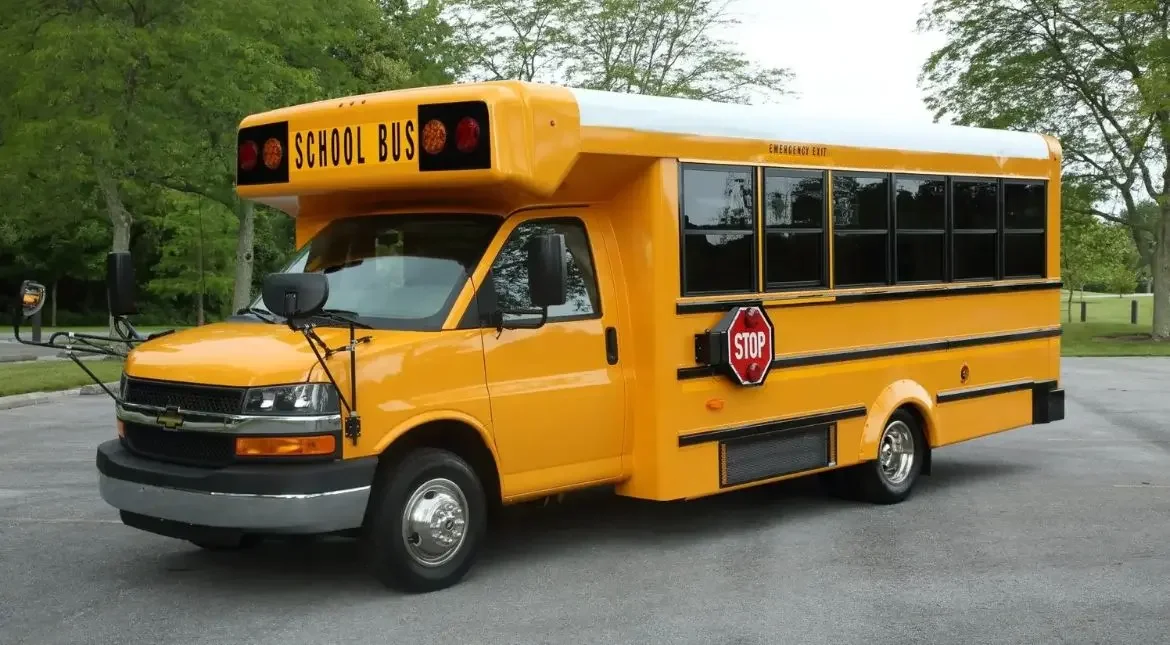
Georgia school districts shopping for a Type A bus are navigating a procurement landscape that looks different from most other states. Unlike New York or California, Georgia has no statewide school bus electrification mandate in place — which means districts have more flexibility in their fuel choice, but also less policy-driven urgency and fewer state-specific incentive programs to lean on. That doesn't make electrification the wrong move for Georgia districts. It just means the decision rests more squarely on operational fit and financial planning than on compliance deadlines.
Endera's Type A school buses — the Endera 4, 5, and 6 — are available in ICE, propane, CNG, and full electric configurations, manufactured at the company's Ottawa, Ohio facility and configurable to the specific demands of Georgia routes. For districts in metro Atlanta running special education transport, rural south Georgia districts covering long daily routes, or anything in between, there's a configuration worth evaluating.
Make the fuel decision on your terms — contact Endera's sales team today to compare configurations and build a procurement case that holds up at budget review.
Georgia's School Bus Landscape: What Shapes the Decision

No Mandate, More Flexibility — But Federal Funding Still Applies
Georgia districts don't face a state-level electrification deadline, but that doesn't mean the funding picture is bare. The EPA Clean School Bus Program is a federal program with no state mandate requirement — Georgia districts are eligible to apply and have received awards in recent funding rounds. The program covers a significant portion of electric bus cost for qualifying districts, including Title I schools and high-need communities that make up a substantial portion of Georgia's rural district landscape. For districts that qualify, the funding gap between an ICE and EV bus shrinks considerably.
Georgia's Route Mix Requires Honest Assessment
Georgia's school transportation profile spans dense suburban districts in the Atlanta metro, mid-sized districts in cities like Savannah, Augusta, and Macon, and rural districts in south and coastal Georgia covering long, spread-out routes.
Type A buses serve a specific slice of that landscape — special education routes, low-ridership rural runs, and smaller districts where a full-size bus would be chronically underutilized. The right fuel type for a Type A in a rural south Georgia district running 60-mile daily routes looks different from the right choice for a Fulton County special education route covering predictable urban stops.
The Endera Type A Lineup for Georgia Districts
Three Models, Fully Configurable
The Endera 4, 5, and 6 cover 14 to 30 passengers across 4 to 6 section configurations, with options for standard seating, ADA-compliant wheelchair lifts, and storage layouts tailored to specialized transport needs. Special education transport is the dominant use case for Type A buses across Georgia, and the configurability of Endera's lineup — a direct result of manufacturing the body and powertrain under one roof — means districts aren't forced into a generic floor plan that doesn't match their actual student population.
Ford and Chevrolet Chassis, Both Available
The Endera 4, 5, and 6 are available on both Ford and Chevrolet cutaway chassis. For Georgia districts with existing service relationships with a Ford or GM dealer, maintaining chassis consistency across their fleet reduces training overhead and simplifies parts inventory. Both platforms are broadly serviced across the state, including in smaller markets where a specialized bus service center may not be accessible.
Fuel Choice for Georgia Districts: A Practical Breakdown
ICE and Propane for Districts Not Ready to Electrify
For Georgia districts without charging infrastructure in place — particularly in rural areas where depot upgrades require significant utility coordination — ICE and propane remain practical starting points. Propane offers lower emissions than gasoline, more stable fuel costs, and doesn't require the electrical infrastructure investment that EV charging demands. It's a reasonable bridge for districts that want to reduce emissions meaningfully without committing to a full EV transition before the infrastructure is ready.
The Electric Case for Georgia — Where It Works
For Georgia districts running predictable, shorter Type A routes — particularly special education routes with defined stops and consistent daily mileage — electric configurations are operationally viable and financially attractive when federal funding is factored in.
The Electric School Bus Initiative documents that electricity is cheaper and more stable than diesel as a fuel source, and maintenance costs drop significantly with fewer moving parts and no oil or exhaust system to service. Georgia's relatively mild winters compared to northern states also reduce the cold-weather range penalty that complicates EV planning elsewhere — a practical advantage that doesn't show up in national comparisons but matters operationally.
What Georgia Districts Actually Pay: Funding Reality
The Numbers Behind the EPA Program
The EPA Clean School Bus Program is frequently cited as a reason to go electric — but what matters for Georgia districts isn't that the program exists. It's what lands on the balance sheet after awards, requirements, and timing constraints are applied. For prioritized districts — including many Title I and rural Georgia systems — EPA rebates can reach $245,000–$325,000 per electric bus, including charging infrastructure.
Non-priority districts typically receive less, often in the $115,000–$170,000 range for electric buses. Propane and CNG buses are also eligible, but at significantly lower funding levels, typically $20,000–$45,000 depending on size and eligibility.
The Conditions That Come With the Money
Accessing that funding comes with real requirements. Districts must scrap an existing bus to qualify — typically a 2010 or older diesel unit — and buses cannot be ordered before official award notification. Projects must follow a strict sequence: award → purchase order → delivery → deployment. That sequencing has real implications for Georgia districts working within annual budget cycles and school-year timelines.
| Scenario | Electric Bus | Propane Bus | ICE Bus |
|---|---|---|---|
| Priority district (with funding) | Highest upfront → lowest net cost | Moderate discount | No funding |
| Non-priority district | Reduced but still higher net cost | Small discount | Lowest upfront |
| With ADA lift add-on | + up to $20K covered | + up to $20K covered | Not subsidized |
Georgia districts aren't just deciding between fuel types — they're deciding between net cost after funding, timing constraints, and eligibility requirements. Endera's grant advisory team helps districts understand exactly where they land in that matrix before procurement begins, not after.
True Cost vs. Cash Flow Reality
Long-Term Savings Don't Always Solve Short-Term Budget Pressure
Electric buses deliver genuine savings over a full ownership cycle. Lower fuel costs, lower maintenance expenses, and reduced emissions all compound favorably over 10–12 years. But what most cost comparisons miss is how those savings are distributed across time. The upfront cost of an electric Type A is higher than a comparable ICE model — largely due to battery systems — and that capital expense lands immediately while the savings accrue slowly. For Georgia districts operating on tight annual budgets without dedicated fleet replacement funds, that cash flow gap is a real constraint.
Planning Around It With the Right Financing and Grants
Financing structure matters as much as total cost for most Georgia districts. Lenders often view EVs as higher-risk assets, which can mean tighter terms and higher monthly payments in early ownership years. Programs like the IRS commercial clean vehicle credit and EPA Clean School Bus grants can reduce the net purchase price significantly — but grant timing doesn't always align with procurement cycles, and that gap has to be managed.
Endera's financing and grant advisory team works with districts to structure purchases in a way that manages early-year cash flow while capturing the long-term benefit — handling grant applications, identifying lease options, and coordinating funding timelines so the financial plan holds together before the contract is signed.
Manufactured in Ohio, Delivered to Georgia
Domestic Supply Chain, Predictable Lead Times
Every Endera Type A is built at the company's 250,000-square-foot Ottawa, Ohio facility, with approximately 65% of components sourced from within the state. That domestic manufacturing base supports compliance with Buy America requirements for federally funded Georgia district purchases — including those funded through EPA Clean School Bus grants or FTA programs. Lead times are more predictable than vehicles assembled from international supply chains, which matters for Georgia districts working within defined school-year procurement and deployment windows.
The Right Bus for Georgia, Configured for Your District
Georgia districts have more flexibility than mandate-driven states — which means the decision comes down to what actually fits the routes, the budget, and the infrastructure. Endera's Type A lineup covers the full range of fuel options and configurations, backed by a manufacturer that handles the vehicle, the software, and the funding support under one roof.
Make the most of that flexibility. Talk to an Endera specialist today to find the right Type A configuration for your Georgia district.
FAQs
Is there a school bus electrification mandate in Georgia?
No. Georgia does not currently have a statewide school bus electrification mandate. Georgia districts can choose ICE, propane, CNG, or electric configurations based on operational fit and financial planning rather than compliance deadlines.
Are Georgia school districts eligible for EPA Clean School Bus funding?
Yes. The EPA Clean School Bus Program is a federal program available to eligible districts nationwide, including Georgia. Priority funding is available for Title I schools and high-need communities. Endera's financing team assists Georgia districts with identifying and applying for this and other available programs.
Which Endera Type A models are available for Georgia districts?
The Endera 4, 5, and 6 are all available in ICE, propane, CNG, and full electric configurations. All three support ADA-accessible layouts for special education transport.
Do Endera buses meet Buy America requirements for federally funded purchases?
Yes. With approximately 65% of components sourced domestically, Endera's manufacturing supports Buy America compliance for federally funded procurement contracts.
Is electric a good choice for Georgia's climate?
Georgia's relatively mild winters reduce the cold-weather range penalty that affects EV performance in northern states. For shorter, predictable routes, electric configurations are operationally viable and financially attractive when federal grant funding is applied. Longer rural routes may be better served by propane or CNG in the near term.
What chassis options are available for Georgia districts?
The Endera 4, 5, and 6 are available on both Ford and Chevrolet cutaway chassis, giving districts flexibility in procurement and ongoing service preferences across Georgia's dealer network.
How does Endera help Georgia districts manage the cost of electrification?
Endera's financing and grant advisory team assists districts with grant applications, financing structure, and leasing options — specifically to help manage the upfront cost gap between ICE and EV buses while accessing the long-term operating savings.