
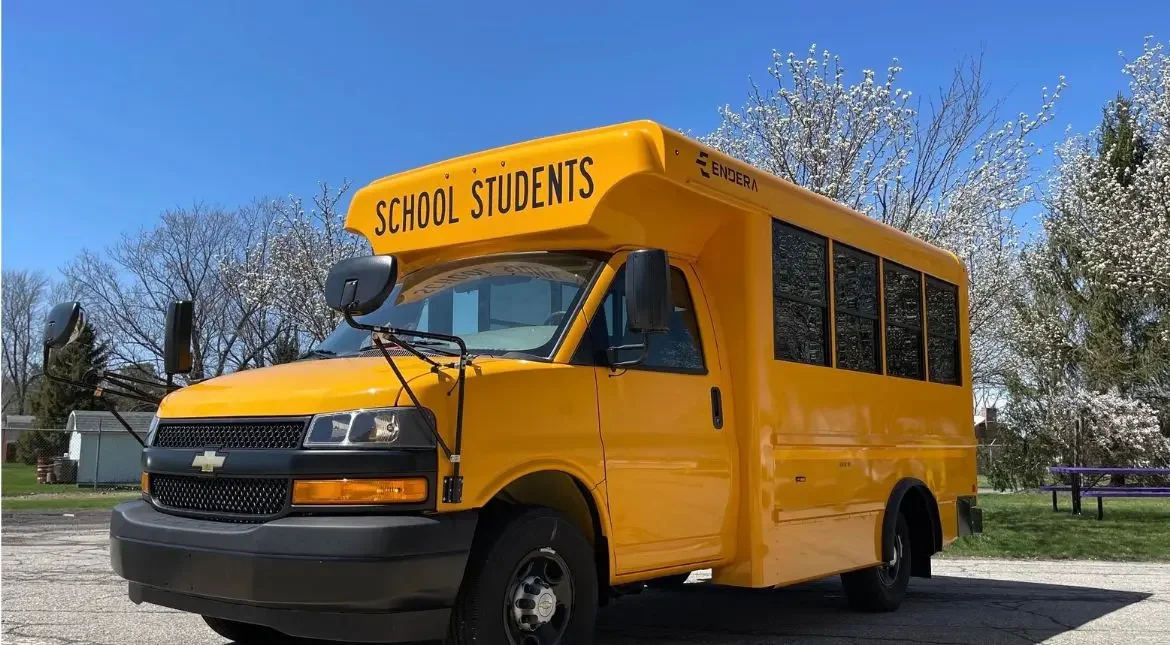
Tennessee's student transportation environment spans both ends of the operational spectrum — urban metro districts in Nashville, Memphis, and Knoxville running dense neighborhood routes, and rural county districts in East Tennessee managing long mountain pickups where roads narrow and turnaround space is limited. A single bus format doesn't serve both equally, and the Type A fits the half of that equation where a full-size bus is the wrong tool.
Endera manufactures Type A school buses in ICE, propane, CNG, and full-electric configurations on Ford E450 and Chevrolet Express cutaway chassis. For Tennessee districts managing special education routes, Head Start programs, or rural pickups with lower student counts, the Type A format is purpose-built for the work — not a van conversion dressed up to fill the role.
Ready to optimize your routes? Contact Endera's fleet specialists today to design a custom configuration blueprint for your district.
What Is a Type A School Bus?
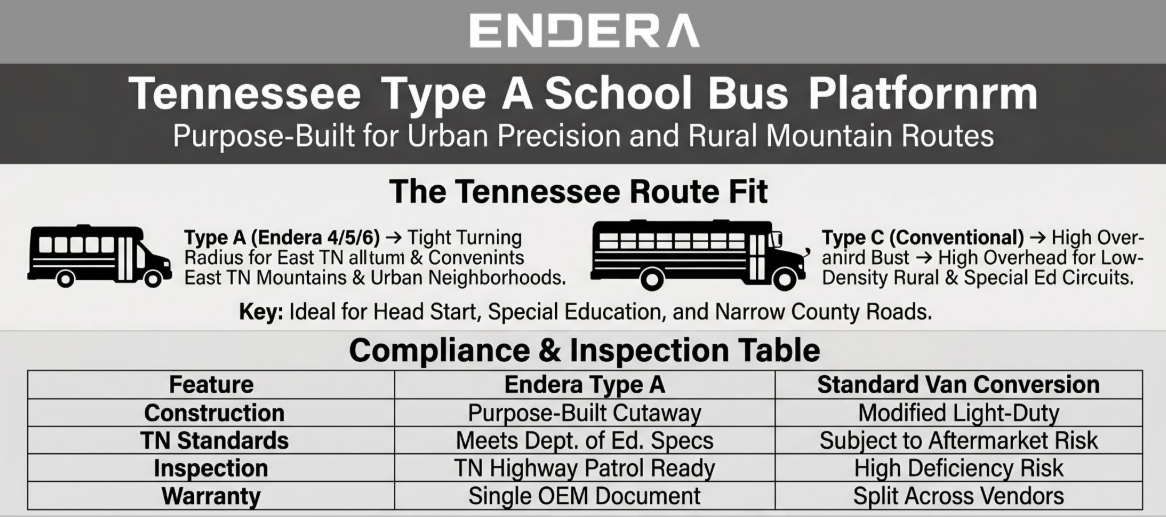
Tennessee's school bus construction and equipment specifications define Type A buses as cutaway chassis vehicles built for smaller student populations — above van-conversion capacity but below the Type C conventional cab-forward buses used for primary high-enrollment routes. The National Congress on School Transportation sets the national standards that Tennessee's specifications draw from, defining Type A construction, safety equipment, and operational requirements.
For Tennessee districts, Type A buses serve the routes where a 48-passenger Type C would run consistently underloaded — special education circuits, Head Start and daycare programs, rural pickups with small student counts at each stop, and activity transportation where a full-size bus is both wasteful and harder to maneuver.
Type A vs. Type C: Matching the Vehicle to Tennessee Routes
| Feature | Type A | Type C |
|---|---|---|
| GVWR | Up to 14,500 lbs | 19,501–26,000 lbs |
| Typical seating | 10–24 passengers | 24–48 passengers |
| CDL required | Generally not | Yes |
| Best fit | Special ed, rural, low-density | Primary high-enrollment routes |
| Fuel cost per route | Lower — smaller engine, lighter load | Higher overhead per underloaded run |
Tennessee districts commonly operate both types — Type C for primary enrollment routes and Type A for specialized, lower-volume, and accessibility-focused applications.
Tennessee Compliance and Inspection Requirements
Tennessee school buses must meet construction and equipment standards published by the Tennessee Department of Education and pass annual inspections administered through the Tennessee Highway Patrol pupil transportation program. Buses that fail inspection are removed from service until deficiencies are corrected.
Tennessee school bus drivers must hold a CDL with a school bus endorsement. The Tennessee School Bus Operational Safety Manual outlines driver procedures, loading standards, and weather-related operational protocols that apply statewide. Endera provides full specification sheets and compliance documentation to support Tennessee's formal procurement and inspection review process.
Why Tennessee Districts Rely on Type A Buses
The National Association of State Directors of Pupil Transportation Services identifies special-needs transportation as one of the fastest-growing segments of school fleet demand nationally — a trend fully present in Tennessee. Type A buses dominate this segment because accessibility equipment, flexible seating, and frequent-stop routing are built into the vehicle format rather than worked around it.
Rural East Tennessee presents a separate but equally strong case. Mountain roads, narrow county routes, and long distances between student pickup points create operational conditions where a compact, maneuverable Type A outperforms a full-size bus in practical daily use. According to Bureau of Transportation Statistics data, rural student transportation demand remains steady even as enrollment concentrates in metro areas — meaning rural route procurement stays active regardless of district size trends.
ADA Accessibility for Tennessee School Districts
Special education and accessible transport represent the largest share of Type A bus procurement across Tennessee's districts. ADA accessible transportation requirements and FTA Part 37 transportation service regulations define the compliance standards that school districts must meet for accessible student transport — requirements enforced regardless of district size or geography.
Endera's flat-floor Type A configurations are available with 800 lb Braun ADA lifts installed at the manufacturing stage. For Tennessee districts serving students under IDEA and ADA requirements, OEM-installed accessibility equipment provides better compliance standing and unified warranty coverage than post-sale retrofits sourced through separate vendors.
Fuel Options for Tennessee Type A Buses
Tennessee's mild-to-moderate climate removes the extreme cold-weather constraints that complicate fuel selection in northern states, giving districts more operational flexibility across powertrain options:
ICE (gasoline): Widest parts and service availability across Tennessee; lowest infrastructure barrier; reliable across the state's dealer network
Propane: Reduces fuel costs 30–40% versus gasoline per DOE Alternative Fuels Data Center data; lower emissions; growing propane infrastructure across Tennessee makes it a viable near-term alternative for districts seeking cleaner fleets without full electrification
CNG: Lower fuel cost than diesel; works best for districts with existing natural gas infrastructure
Electric: Best for fixed routes with overnight depot charging; the EPA Clean School Bus Program covers vehicles and charging infrastructure for qualifying Tennessee districts; mild Tennessee climate makes battery range more predictable than in colder states
All four configurations share the same Type A platform — districts can standardize on Endera and shift powertrain on future procurement cycles without changing manufacturers.
New vs. Used: What Tennessee Districts Should Weigh
New Type A school buses typically start around $80,000 and range to $150,000 depending on powertrain and configuration. Used alternatives run $20,000–$60,000 in serviceable condition — lower upfront, but without warranty coverage, current safety certifications, or eligibility for federal clean bus funding.
CVSA inspection standards govern fleet compliance checks that Tennessee operators face annually. Used buses often require investment to meet current standards before returning to service — deferred maintenance, worn ADA systems, and outdated safety equipment are common in district surplus inventory. For Tennessee districts with any available grant pathway, Endera's grant navigation and financing services help identify applicable programs and structure new purchases to reduce net acquisition cost.
Financing and Fleet Replacement Planning
The Tennessee Comptroller's office provides oversight of district budgeting and procurement — a framework that shapes how Tennessee school districts plan fleet replacement cycles and structure capital purchases. Most districts align bus purchases with multi-year replacement schedules and available funding cycles rather than reactive single-unit replacements. Endera's sales team works with districts through specification, compliance documentation, and procurement timing to fit within those planning windows.
Get Your Fleet Spec'd
New 2026 Type A models are available for immediate delivery through Endera Stock for districts with pressing replacement timelines. For districts working within Tennessee's formal procurement process, Endera provides full specification documentation, compliance materials, and grant application support.
To discuss fleet configuration, powertrain options, or Tennessee procurement requirements, contact Endera's sales team.
FAQs
What does Tennessee's school bus specifications document require for Type A buses?
Tennessee's school bus construction and equipment specifications define body construction standards, safety equipment requirements, emergency exits, lighting systems, and chassis criteria that Type A buses must meet before entering district service. Endera's Type A buses are built to meet or exceed these standards, with full compliance documentation available for Tennessee's procurement and inspection review process.
Do Tennessee school bus drivers need a CDL to operate a Type A bus?
Yes. Tennessee requires school bus drivers to hold a CDL with a school bus endorsement, applicable regardless of vehicle GVWR. The Tennessee School Bus Operational Safety Manual outlines driver certification, loading procedures, and weather operation protocols that all Tennessee school bus operators must follow. Districts should confirm driver certification status before placing new vehicles in service.
What ADA accessibility configurations are available on Endera's Type A buses?
Endera's flat-floor Type A configurations include 800 lb Braun ADA lifts installed at the manufacturing stage, with seating configurable across 4-to-6 section layouts to accommodate wheelchair securement and ambulatory positions. All configurations meet FTA Part 37 accessibility requirements. For Tennessee special education programs, OEM-installed equipment provides unified warranty coverage and stronger compliance standing than post-sale retrofits.
Are there federal funding programs available for Tennessee school districts buying new buses?
Yes. The EPA Clean School Bus Program provides funding for electric and clean-fuel bus replacements — Tennessee districts are eligible to apply. Propane buses may qualify for alternative fuel incentives as well. Used buses are typically ineligible regardless of condition. Endera's grant navigation services help Tennessee districts identify applicable programs and manage the application process alongside procurement.
How does propane compare to diesel for Tennessee school bus operations?
Propane reduces fuel costs 30–40% compared to diesel equivalents per DOE Alternative Fuels Data Center data while producing significantly lower particulate and NOx emissions. Tennessee's climate is mild enough that propane operates without the cold-weather complications it can present in northern states. Growing propane infrastructure across Tennessee makes it the most practical near-term cleaner-fuel option for districts not yet ready to commit to full electrification.
How does Tennessee's terrain affect Type A bus selection for rural districts?
East Tennessee's mountain roads, narrow county routes, and long inter-stop distances favor compact, maneuverable Type A buses over full-size Type C models. Tighter turning radius, lower operating cost per route, and easier driver handling on steep or winding roads make the Type A format operationally appropriate for rural East Tennessee districts in ways a 48-passenger bus simply isn't.
How long does a new Type A school bus last under Tennessee operating conditions?
Purpose-built Type A school buses on medium-duty cutaway chassis typically operate 10 to 12 years under daily use with proper maintenance. Tennessee's mild climate reduces weather-related body wear compared to northern states. Adherence to Tennessee Highway Patrol annual inspection requirements and CVSA maintenance benchmarks are the primary factors in reaching the full service life.