
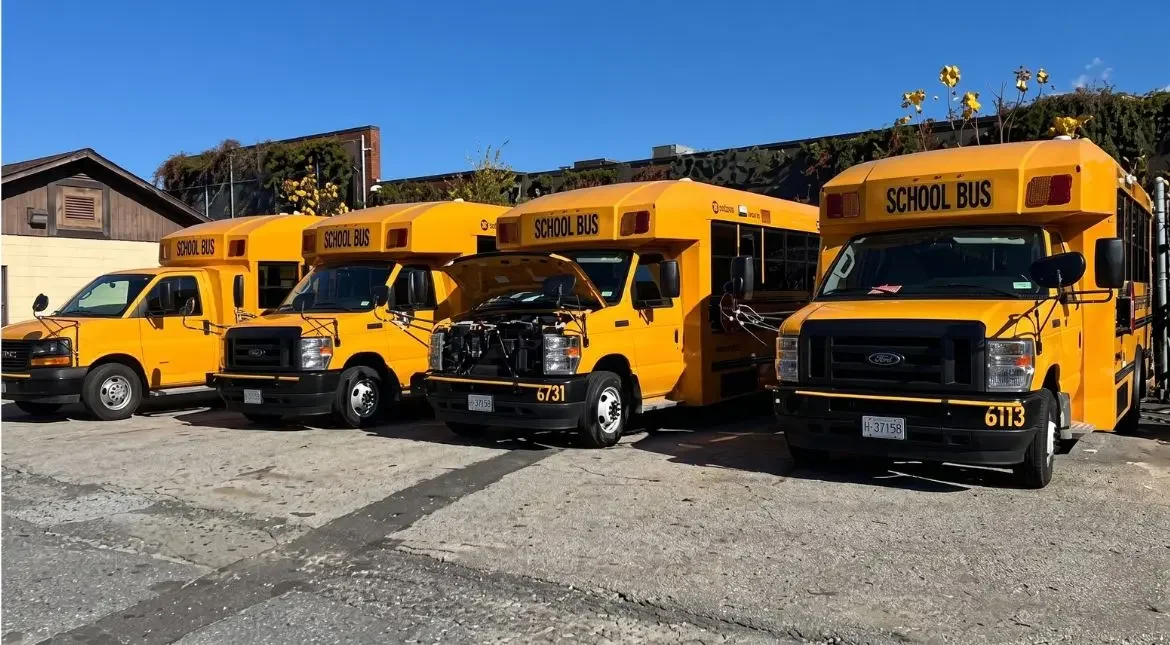
Rhode Island's school transportation environment is shaped by its geography in ways that make smaller buses the practical default rather than a compromise. Dense neighborhoods, tight urban streets, and short inter-district distances mean most Rhode Island routes don't need a 48-passenger Type C bus — they need a right-sized, commercially certified vehicle that handles daily cycles without the operational overhead of a full-size fleet asset.
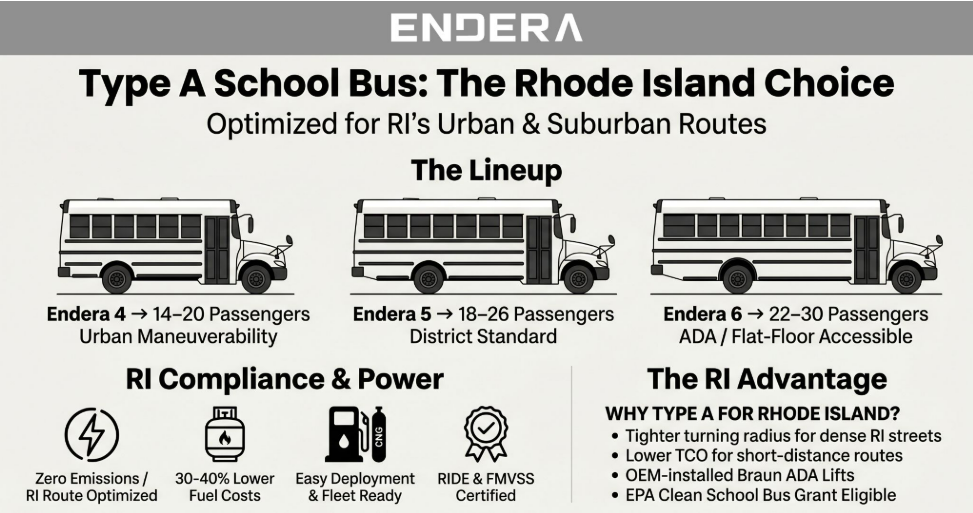
Endera manufactures Type A school buses in ICE, propane, CNG, and full-electric configurations on Ford E450 and Chevrolet Express cutaway chassis. For Rhode Island districts managing special education routes, smaller student populations, or urban circuits where maneuverability is a daily operational constraint, the Type A format is the operationally correct choice.
Ready to optimize your routes? Contact Endera's fleet specialists today to design a custom configuration blueprint for your district.
What Is a Type A School Bus?
The National Congress on School Transportation defines Type A school buses as cutaway chassis vehicles built for smaller passenger loads — typically 10 to 24 students — where a full-size Type C or D bus creates more overhead than the route justifies. Rhode Island's school bus operational and safety regulations govern vehicle equipment standards, inspection requirements, and operational compliance for all school buses operating in the state.
Type A buses serve the routes that fall outside the primary enrollment circuits — special education transport, Head Start programs, smaller private and charter school runs, and any route where accessibility equipment, frequent stops, and smaller student groups are the norm rather than the exception.
Type A vs. Type C: The Right Fit for Rhode Island
| Feature | Type A | Type C |
|---|---|---|
| GVWR | Up to 14,500 lbs | 19,501–26,000 lbs |
| Typical seating | 10–24 passengers | 24–48 passengers |
| CDL required | Generally not | Yes |
| Best fit | Special ed, urban, low-density | High-enrollment primary routes |
| Urban advantage | Easier parking, tighter turning radius | Less maneuverable in dense areas |
Rhode Island's compact geography reinforces the Type A case across both urban and suburban districts — shorter routes, denser streets, and smaller school facilities all favor the smaller format.
Rhode Island Transportation Compliance
The Rhode Island Department of Education student transportation office oversees fleet compliance, operational standards, and transportation oversight for districts statewide. School buses must meet Rhode Island's equipment and safety requirements and pass annual inspections before entering service. The NHTSA school bus safety framework establishes the federal baseline that Rhode Island's standards build on — and school buses remain among the safest vehicles on U.S. roads as a result of those combined standards.
Rhode Island school bus drivers must hold a CDL with a school bus endorsement. Endera provides full specification sheets and compliance documentation to support Rhode Island's formal procurement and inspection review process, including the federal rollover structural integrity standards updated under Federal Motor Vehicle Safety Standards for school bus rollover protection.
ADA Accessibility for Rhode Island School Districts
Special education and accessible transport drive a large share of Type A bus procurement across Rhode Island's districts. ADA accessible transportation requirements and FTA Part 37 transportation service regulations define the compliance standards that school districts must meet for accessible student transport — standards enforced regardless of district size or route length.
Endera's flat-floor Type A configurations are available with 800 lb Braun ADA lifts installed at the manufacturing stage. For Rhode Island special education programs operating under IDEA and ADA requirements, OEM-installed accessibility equipment provides unified warranty coverage and cleaner compliance documentation than post-sale retrofits.
Electric Type A Buses: What Rhode Island Districts Should Know
Rhode Island's short route distances and urban geography make it one of the more practical environments for electric Type A bus adoption. Most Rhode Island district routes fall comfortably within daily EV range, and overnight depot charging at school facilities is a straightforward implementation for districts with existing electrical infrastructure.
The EPA Clean School Bus Program provides federal funding for electric and clean-fuel bus replacements — and Rhode Island districts are eligible to apply. At the national level, the National Association of State Directors of Pupil Transportation Services tracks growing EV adoption across districts of all sizes, with smaller urban districts increasingly among the early adopters given their route profiles. Endera's turnkey charging solutions — including site assessments, DC fast charger procurement, and metering installation — handle the infrastructure side without requiring districts to source those services separately.
EV vs. ICE: The Total Cost of Ownership Difference
Electric Type A buses carry higher upfront costs than ICE equivalents, but lower operating expenses compound meaningfully over a 10-to-12-year service life. The DOE Alternative Fuels Data Center tracks fleet operating costs by fuel type — electric drivetrains typically reduce maintenance spend 30–40% relative to diesel, with fuel savings adding further over the vehicle's lifetime. The DOE Vehicle Technologies Office provides additional fleet efficiency data for districts modeling long-term operational costs across powertrain options.
For Rhode Island districts weighing the upfront premium against long-term savings, the combination of federal funding and a short, fixed-route profile often brings the net cost of electric below ICE when the full ownership window is considered.
Fuel Options Across the Full Type A Lineup
For districts not yet ready for full electrification, Endera's Type A buses are available in propane and CNG configurations alongside standard ICE. Propane reduces fuel costs 30–40% versus gasoline and is eligible for clean fuel incentive programs that diesel replacements typically cannot access. Rhode Island's mild climate means propane operates without the cold-weather complications that affect northern states — no special fuel system adaptations required for the state's typical winter conditions.
CNG suits districts with existing natural gas infrastructure and delivers lower per-mile fuel costs than diesel. ICE on Ford E450 remains the baseline for districts prioritizing the widest possible service and parts network — a practical consideration in a small state where specialized EV service infrastructure may not yet be broadly available outside Providence and the immediate metro area.
Strategic Platform Standardization and Compliance
All four powertrain configurations share the same Type A platform — Rhode Island districts can standardize on Endera now and shift powertrain on the next procurement cycle without changing manufacturers or retraining staff on a new vehicle platform.
CVSA inspection standards govern fleet compliance checks that Rhode Island operators face annually. Purpose-built commercial chassis from an OEM manufacturer consistently outperform light-duty van conversions on these inspections — particularly in the structural integrity and safety equipment categories that CVSA evaluates.
Get Your Fleet Spec'd
New 2026 Type A models are available for immediate delivery through Endera Stock. For districts working within Rhode Island's formal procurement process, Endera provides full specification documentation, compliance materials, and grant application support.
To discuss fleet configuration, powertrain options, or Rhode Island procurement requirements, contact Endera's sales team.
Frequently Asked Questions
What are Rhode Island's school bus equipment and compliance requirements?
Rhode Island school buses must meet state equipment and safety standards governed by RIDE transportation regulations and pass annual inspections before entering service. Federal FMVSS standards — including updated rollover structural integrity requirements — set the national baseline. Endera's Type A buses meet or exceed both state and federal standards as delivered, with full compliance documentation available for Rhode Island's procurement review.
Do Rhode Island school bus drivers need a CDL?
Yes. Rhode Island school bus drivers must hold a CDL with a school bus endorsement. This requirement applies regardless of vehicle GVWR or passenger count. Districts purchasing new Type A buses should confirm driver certification status before placing vehicles in service.
Are electric Type A buses practical for Rhode Island's short urban routes?
Yes — Rhode Island's compact geography and short average route distances make it one of the more favorable environments for electric Type A adoption. Most district routes fall within daily EV range, overnight depot charging is straightforward, and federal EPA Clean School Bus funding covers both vehicles and charging infrastructure for qualifying districts.
What ADA accessibility options are available on Endera's Type A buses for Rhode Island districts?
Endera's flat-floor Type A configurations include 800 lb Braun ADA lifts installed at the manufacturing stage, with seating configurable across 4-to-6 section layouts for wheelchair securement and ambulatory positions. All configurations meet FTA Part 37 accessibility requirements. OEM-installed equipment provides better compliance standing and unified warranty coverage than post-sale retrofits.
How does the total cost of ownership compare between electric and ICE Type A buses?
Electric buses carry higher upfront costs but lower ongoing expenses — electric drivetrains typically reduce maintenance spend 30–40% versus diesel per DOE Alternative Fuels Data Center data, with fuel savings compounding over a 10-to-12-year service life. For Rhode Island districts with fixed short routes and depot charging available, the combination of federal funding and operating savings often brings the net 10-year cost of electric below that of an equivalent ICE purchase.
Are there federal funding programs available for Rhode Island school districts buying new buses?
Yes. The EPA Clean School Bus Program provides federal funding for electric and clean-fuel bus replacements, and Rhode Island districts are eligible to apply. Used buses are typically ineligible regardless of condition. Endera's grant navigation services help districts identify applicable programs and manage applications alongside the procurement process.
How long does a new Type A school bus last under Rhode Island operating conditions?
Purpose-built Type A school buses on medium-duty cutaway chassis typically operate 10 to 12 years under daily use with proper maintenance. Rhode Island's mild coastal climate reduces weather-related body wear compared to northern interior states. Annual inspection compliance per RIDE standards and CVSA maintenance benchmarks are the primary factors in reaching the full service life.