
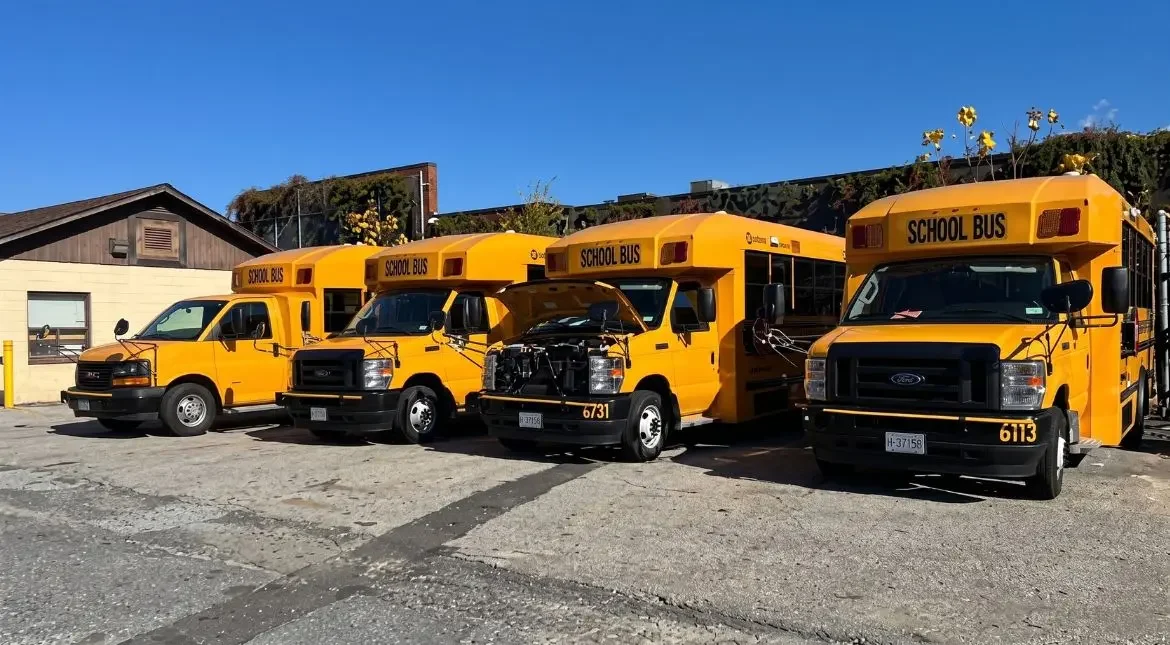
Oklahoma school districts purchasing Type A buses in 2026 face no state mandate, no purchase rebates, and an evolving federal funding landscape. This makes clear planning more important than urgency. Successful districts focus on identifying which routes are ready for electrification, choosing appropriate fuel types for others, and preparing early for the next EPA funding cycle instead of reacting at the last minute.
Endera's Type A school buses — the Endera 4, 5, and 6 — are available in ICE, propane, CNG, and full electric configurations on Ford and Chevrolet cutaway chassis, manufactured at Endera's Ottawa, Ohio facility. For Oklahoma districts in the OKC and Tulsa metros running shorter special education circuits, and for rural districts covering longer routes through central and western Oklahoma, there's a configuration worth considering — and a procurement strategy worth building now.
Plan ahead or get caught flat-footed at the next funding cycle — contact Endera's sales team today to start building your district's procurement roadmap.
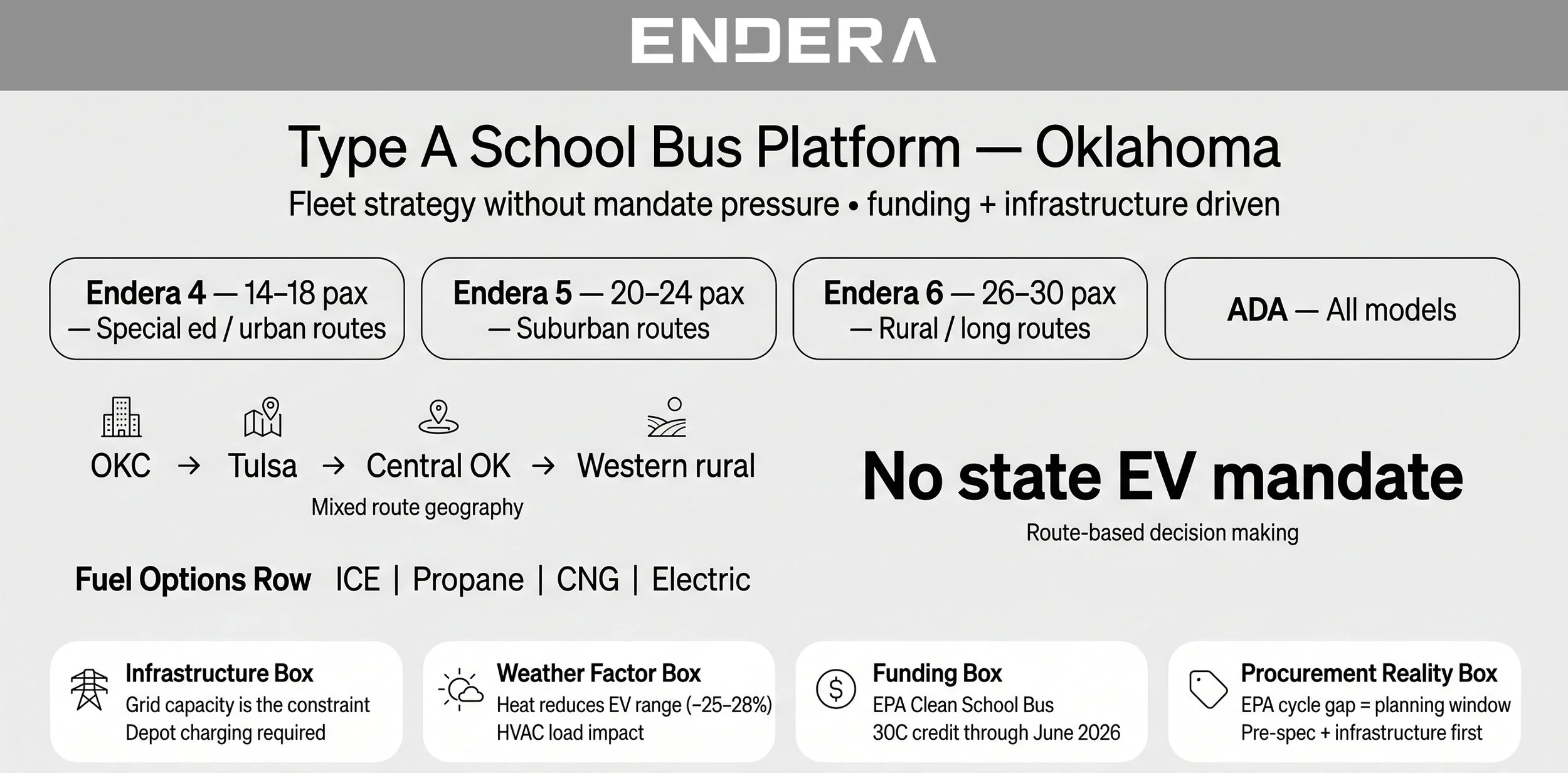
Oklahoma's School Bus Landscape: What Districts Are Actually Working With
No Mandate, No State Rebate — Federal Programs Are the Path
Oklahoma has no statewide electrification requirement for school bus fleets and no state-level vehicle purchase rebate program. The EPA Clean School Bus Program is the primary funding mechanism, and it's currently being restructured following a public comment period that closed in April 2026.
No awards are moving forward from the 2024 cycle, and the 2026 program design is still taking shape. For Oklahoma districts, that gap is a planning window — not a reason to wait. Diesel buses keep aging regardless of federal program timelines, and the districts positioned to move quickly when the next round opens are the ones doing the preparation work now.
Oklahoma's Route Geography Makes the Fuel Decision More Complex
Oklahoma's school transportation picture is genuinely varied. Suburban special education routes in the OKC metro and Tulsa cover short, predictable distances where electric configurations are operationally viable. Rural districts in western Oklahoma and the Panhandle run routes that can stretch to 60 or 80 miles daily across sparsely populated terrain with limited charging infrastructure access.
The right fuel choice for a Midwest City district looks very different from the right choice for a district in Woodward or Guymon — and a manufacturer that offers only one path doesn't serve the full range of what Oklahoma districts actually need.
Heat, Range, and What Oklahoma Summer Does to EV School Buses
A Variable That Gets Underweighted
Oklahoma's summer heat creates EV performance considerations that matter specifically for school bus operations. Research published in Applied Energy shows that extreme temperatures increase EV energy consumption by roughly 25–28%, driven primarily by HVAC demand and thermal management.
For a Type A bus running a morning special education route in 100°F+ heat, keeping students comfortable draws significant battery power that reduces effective range. That reduction doesn't make EVs the wrong choice for Oklahoma schools — but it means route planning needs to account for it explicitly, not discover it after deployment.
Short, Predictable Routes Absorb It — Longer Ones Don't
Urban and suburban special education circuits in OKC and Tulsa — the core use case for Type A buses in those markets — are typically short enough and structured enough that heat-driven range reduction is manageable with overnight depot charging.
Rural routes in western Oklahoma, where daily mileage is higher and charging access is limited, are a different calculation. Endera Dispatch provides real-time state-of-charge monitoring that helps transportation directors manage these variables during operation. But the route assessment needs to happen before the vehicle arrives, not after.
The Endera Type A Lineup for Oklahoma Districts
Three Models, Configured for Oklahoma's Transportation Needs
The Endera 4, 5, and 6 cover 14 to 30 passengers across 4 to 6 section configurations, with options for standard seating, ADA-compliant wheelchair lifts, and storage layouts for special education and general student transport. Special education transport is the dominant use case for Type A buses across Oklahoma, particularly in districts serving students with physical, developmental, or medical needs that require smaller, more accessible vehicles.
The configurability of Endera's lineup — driven by manufacturing the body and powertrain under one roof in Ottawa, Ohio — means Oklahoma districts can specify the exact floor plan their students require.
Ford and Chevrolet Chassis, Both Available Statewide
The Endera 4, 5, and 6 are available on both Ford and Chevrolet cutaway chassis, giving Oklahoma districts flexibility in procurement and service preferences. For districts in smaller markets across central and western Oklahoma where a specialized bus service center may not be accessible, chassis serviceability through a regional Ford or GM dealer matters practically. Both platforms are broadly serviced across the state.
Fuel Choice for Oklahoma Districts: A Practical Breakdown
CNG and Propane for Districts Not Ready to Electrify
Oklahoma’s strong natural gas infrastructure makes CNG a practical alternative fuel option for school districts, offering lower emissions, stable fuel costs, and no charging infrastructure needs. Propane is also widely available and can qualify for lower-tier EPA Clean School Bus funding.
Both CNG and propane provide viable cleaner-fuel steps for districts not yet ready for full electrification.
Where Electric Works for Oklahoma Schools
For Oklahoma districts running shorter, more predictable Type A routes — urban special education circuits in OKC, Edmond, Norman, Tulsa, and Broken Arrow — electric configurations are operationally viable when depot charging is in place. The Electric School Bus Initiative documents that electric buses save more than $170,000 per bus in fuel and maintenance over their lifespan.
In a state with relatively low electricity rates outside peak periods, those operating savings are meaningful over a 10–12 year service life. The honest constraint is upfront cost — and with the 45W vehicle credit eliminated and the EPA program between cycles, the financial case for Oklahoma districts today rests more heavily on the 30C charging credit and EPA program timing than it did a year ago.
What Oklahoma Districts Pay: The Funding Reality in 2026
The Credits That Changed in 2025
The 45W commercial clean vehicle credit — which previously provided up to $40,000 per electric school bus — was eliminated for vehicles acquired after September 30, 2025. That removal meaningfully narrows the federal incentive stack for Oklahoma districts considering electric buses today. The 30C charging equipment credit — up to $100,000 per installed charging port — remains available through June 30, 2026, and is the most actionable near-term tool for Oklahoma districts planning depot charging installations. Equipment must be physically placed in service, not just purchased or permitted, by that date.
The EPA Program Between Cycles
The EPA Clean School Bus Program is currently paused and expected to reopen in 2026. Oklahoma districts that prepare early—through vehicle specs, infrastructure planning, and utility coordination—will be better positioned to move quickly when it does.
The program also requires scrappage of an older diesel bus for each electric bus funded, so districts should begin identifying eligible 2010-or-older vehicles in advance.
| Scenario | Approximate Cost |
|---|---|
| Diesel / propane Type A bus | $90K–$130K |
| Electric Type A bus | $300K–$400K |
| EPA grant (priority district, when available) | Up to $325K including infrastructure |
| Net cost (priority district, EPA funded) | Near parity or modest premium |
Infrastructure Reality: Power Availability Is the Real Constraint
Utility Coordination Comes First — Not Last
Procurement timelines often focus on the bus, but electrification actually starts with the grid, which is slower and more complex than vehicle manufacturing.
Depot electrification requires early coordination with utilities to assess capacity, rates, and interconnection needs. Charging infrastructure should be planned alongside vehicle selection, not after, including evaluation of electrical service, metering, load management, and demand charges before vehicles arrive.
What Oklahoma Districts Consistently Underestimate
Electrification doesn’t scale linearly—small depots may handle Level 2 charging, but even modest fleets can quickly require hundreds of kilowatts, triggering transformer upgrades or new utility connections.The main challenge isn’t equipment cost but time, with utility upgrades taking 18–24 months and transformers alone potentially 24–104 weeks. For Oklahoma districts, delays can be even longer in smaller markets.
This makes electrification an infrastructure program, not just a vehicle purchase. Planning around power availability—not bus delivery—is key, and Endera’s turnkey depot charging services help address utility and site readiness early to avoid delays.
Procurement Strategy: What Oklahoma Districts Should Do Now
Preparation Is the Competitive Advantage
The districts that use EPA funding most effectively are those ready to act immediately after selection, not just those with strong applications.
That means pre-specifying vehicles, planning depot charging and utility coordination in advance, and preparing scrappage documentation so compliance steps aren’t delayed. Endera helps Oklahoma districts align vehicle selection, infrastructure, and funding timelines so they can move quickly when the next EPA cycle opens.
Using the Gap to Build Infrastructure
The current EPA gap is also a window to build depot charging infrastructure before the funding pressure creates urgency. Districts that install charging now — capturing the 30C credit before it expires in June 2026 — will have operational charging infrastructure in place when they receive an EPA award, rather than needing to build it under the compressed timeline of the award execution pipeline. That sequencing advantage converts the current funding pause from a liability into an opportunity.
The Right Bus for Oklahoma Schools, Built Around Real Conditions
Oklahoma districts don't need a mandate to make good procurement decisions — they need clear information on routes, options, and long-term support. Endera's Type A lineup offers multiple fuel configurations suited to Oklahoma's needs, and the team understands the current funding landscape well enough to help districts plan based on real operational conditions, not just grant timelines.
Plan smart, not reactive. Talk to an Endera specialist today to find the right Type A configuration and procurement strategy for your Oklahoma district.
FAQs
Is there a school bus electrification mandate in Oklahoma?
No. Oklahoma has no statewide electrification requirement for school bus fleets. Districts choose fuel type based on operational fit, infrastructure readiness, and available funding.
Which Endera Type A models are available for Oklahoma districts?
The Endera 4, 5, and 6 are all available in ICE, propane, CNG, and electric configurations, with ADA-accessible layouts for special education transport on both Ford and Chevrolet cutaway chassis.
Is the EPA Clean School Bus Program currently accepting applications?
No. The 2024 award cycle is not moving forward and the 2026 program is being restructured. Oklahoma districts should use this period to prepare applications and infrastructure plans so they can move quickly when the next cycle opens. Endera's grant advisory team assists with that preparation.
Is the 45W vehicle credit still available for Oklahoma school bus purchases?
No. The 45W commercial clean vehicle credit was eliminated for vehicles acquired after September 30, 2025. The 30C charging equipment credit remains available through June 30, 2026.
How does Oklahoma's summer heat affect EV school bus performance?
Extreme heat increases EV energy consumption by roughly 25–28% due to HVAC demand. Short, predictable urban routes absorb this well with overnight depot charging. Longer rural routes require conservative range planning and may be better served by propane or CNG in the near term.
Is CNG a good option for Oklahoma school districts?
Yes. Oklahoma's well-developed natural gas infrastructure makes CNG a practical option for districts not ready to electrify. It offers lower emissions than diesel, more stable fuel costs, and qualifies for EPA program funding at the propane/CNG award tier.
Do Endera buses comply with Buy America requirements?
Yes. With approximately 65% of components sourced domestically, Endera's manufacturing supports Buy America compliance for federally funded Oklahoma district purchases.