
New York's school bus electrification mandate requires all new purchases to be zero-emission by 2027, with full fleet electrification by 2035. These deadlines are real and approaching quickly for districts still running diesel buses. What's often misunderstood is that the mandate applies to new purchases — not retrofits — so the time for strategic planning is now, not at the 2027 deadline.
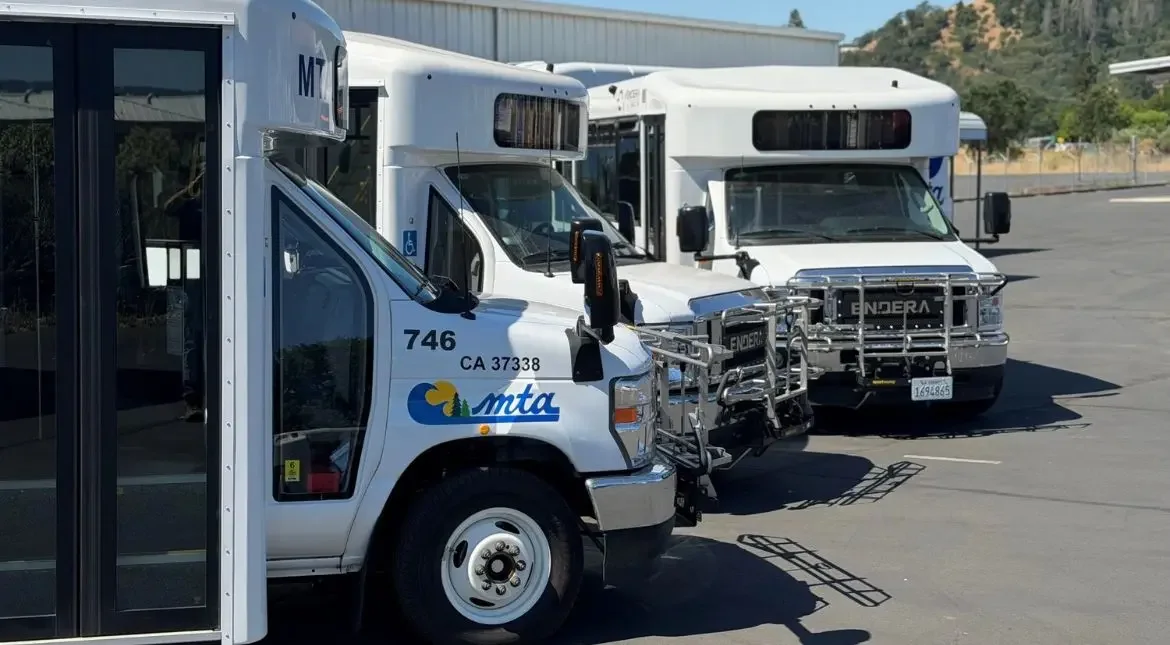
Endera's Type A school buses — the Endera 4, 5, and 6 — are available in both ICE and full electric configurations on Ford and Chevrolet cutaway chassis, manufactured at Endera's Ottawa, Ohio facility.
For New York districts navigating the 2027 transition, the right question isn't whether to buy electric — it's which routes to electrify first, what funding to access now, and how to structure procurement so the transition is operationally sound. 2027 is closer than your district's next budget cycle — contact Endera's sales team today to build a transition plan before the mandate forces one.
"2027 Rule ≠ Fleet Turnover": The Most Misunderstood Constraint
What the Mandate Actually Requires — and What It Doesn't
New York’s 2027 mandate requires new school bus purchases to be zero-emission, but it doesn’t force immediate retirement of existing diesel buses. The rule applies only to new contracts.Buses bought before 2027 can stay in service for 12–18 years, meaning diesel vehicles purchased today may still operate into the late 2030s while remaining fully compliant.
From Compliance Urgency to Lifecycle Planning
The 2035 deadline is better viewed as the end of diesel use after vehicles reach their natural lifespan—not a sudden cutoff. Districts can still operate existing diesel buses after 2027 while staying compliant.
The real focus is how to transition fleets over time without disrupting operations. Starting with shorter, predictable routes allows districts to build experience and infrastructure gradually as they move toward full electrification by 2035.
New York's Mandate: What It Actually Requires and When
The 2027 and 2035 Deadlines in Plain Language
New York's Advanced Clean School Bus regulation requires that all new school bus purchases be zero-emission beginning with model year 2027. Full fleet electrification — meaning every bus operating in the state — is required by 2035. That second deadline matters as much as the first: a district that delays purchasing new electric buses until 2027 still needs to retire its entire existing diesel fleet by 2035, which compresses the remaining transition window for that legacy inventory.
What the Mandate Means for Type A Routes Specifically
Type A buses — the smaller, cutaway-based models used for special education, rural low-ridership routes, and smaller districts — make up a meaningful share of New York's total school bus fleet. They're also among the best candidates for early electrification: shorter routes, lighter vehicles, smaller battery requirements, and predictable daily mileage that aligns well with overnight depot charging. For New York districts that haven't started their Type A electrification yet, starting with the shortest, most predictable routes is both the operationally safest and the financially most defensible first step.
Award ≠ Deployable Fleet: The Gap Between Funding and Operations
What "Selected" Actually Means Under the EPA Program
New York districts accessing EPA Clean School Bus Program funding face the same implementation pipeline as every other state — but with higher stakes given the 2027 purchase mandate bearing down. The EPA distinguishes between project stages: selection, award, payment request approval, and project closeout — with funds only disbursed after multiple compliance and verification steps are completed, including Buy America provisions, procurement documentation, and infrastructure readiness verification. "Selected" does not mean buses arrive on a schedule. It means the execution pipeline has started.
The 12–36 Month Execution Reality
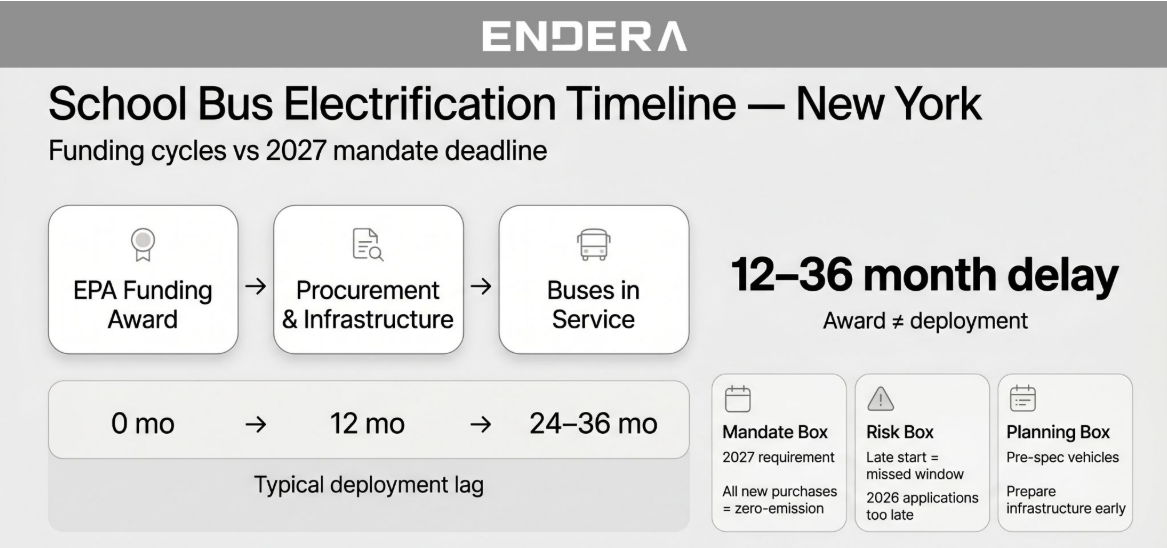
The gap between EPA funding awards and buses in service is typically 12–36 months due to infrastructure, procurement, and utility coordination.For New York districts, starting too late—like applying in 2026—may not leave enough time before the 2027 mandate. Districts that begin planning now, with pre-spec’d vehicles and infrastructure preparation, are far more likely to transition smoothly.
What NY Districts Actually Pay Per Bus
The Per-Bus Math With NYSERDA and EPA Funding Applied
New York's layered funding environment is among the strongest in the country for school bus electrification. The EPA Clean School Bus Program provides up to $325,000 per bus including charging infrastructure for priority districts, and up to $170,000 for non-priority districts. NYSERDA's Electric School Bus Initiative adds state-level rebates on top, and the NY Truck Voucher Incentive Program (NYTV) provides additional point-of-sale discounts for eligible zero-emission vehicles.
| Scenario | Approximate Cost |
|---|---|
| Diesel Type A bus | $90K–$130K |
| Electric Type A bus | $300K–$400K |
| EPA grant (priority district) | Up to $325K including infrastructure |
| NYSERDA rebate (additional) | Varies by program round |
| Net cost (priority district, stacked) | Near parity or modest premium |
For New York priority districts — which include many rural, low-income, and environmental justice communities that make up a significant share of the state's Type A fleet users — the effective per-bus cost after stacked funding can approach diesel parity. For districts that wait until mandate pressure forces the purchase without securing funding first, the full premium lands without offset.
The Endera Type A Lineup for New York Districts
Three Models for NY's Range of Transportation Needs
The Endera 4, 5, and 6 cover 14 to 30 passengers across 4 to 6 section configurations, with options for standard seating, ADA-compliant wheelchair lifts, and storage for special education and general student transport.
New York's Type A fleet spans dense suburban special education routes in Westchester and Long Island, rural upstate routes covering longer daily mileage in the Adirondacks and Southern Tier, and mid-sized city routes in Buffalo, Rochester, Albany, and Syracuse. The configurability of Endera's lineup — driven by manufacturing the body and powertrain under one roof — means districts can specify exact floor plans without adapting to a generic template.
ICE Configurations for Districts With Transition Plans
Not every New York district needs to go fully electric on every route before 2027. The mandate applies to new purchases — a district buying propane or CNG buses in 2025 or 2026 can still operate those vehicles past 2027, and they won't need to replace them by 2035 until they reach end of service life. For districts that need reliable transport on longer routes or in areas where charging infrastructure isn't yet established, ICE and propane configurations from Endera provide a bridge that keeps operations running while the electrification plan is built.
Mandate vs. Operational Reality: What NY Routes Actually Require
Most Districts Are Better Positioned Than They Think
The practical feasibility of New York's mandate varies enormously by geography. NYSERDA's Electric School Bus overview notes that the average school bus in New York travels about 80 miles per day — well within the operating range of Endera's electric Type A lineup with overnight depot charging. Urban and suburban routes in the New York metro and mid-Hudson are well positioned for immediate electrification. For most shorter, predictable Type A routes, the mandate is technically achievable with current technology and available funding.
Where Rural and Cold-Weather Routes Require More Planning
Districts in northern and western New York face two compounding variables: longer route distances and severe winter temperatures. Cold weather increases heating load and reduces effective battery range — particularly on rural routes in the Adirondacks, North Country, and Southern Tier where temperatures routinely drop well below freezing and routes cover more daily mileage than suburban equivalents.
These districts aren't exempt from the mandate, but they need more careful route-level planning and potentially a phased approach — starting with shorter, more predictable routes while using bridge fuels for the longer runs until infrastructure and range technology advance. The 30C charging equipment credit — expiring June 30, 2026 — is particularly important for these districts to capture now, before depot charging becomes a mandate-driven emergency rather than a planned investment.
The 2027 Deadline Is Closer Than the Procurement Calendar Makes It Look
New York districts that start the electrification process now — with funding applications in development, vehicle configurations pre-spec'd, and infrastructure planning underway — will transition smoothly in 2027. Districts that wait until the mandate year to begin procurement will find the funding, the infrastructure, and the lead times all working against them simultaneously.
Don't let 2027 arrive as a surprise. Contact Endera's sales team today to find the right Type A configuration and NY mandate transition strategy for your district.
FAQs
What does New York's 2027 school bus mandate actually require?
Beginning with model year 2027, all new school bus purchases in New York must be zero-emission. Full fleet electrification is required by 2035. Buses purchased before 2027 can continue operating until end of service life. The NYSDEC Advanced Clean School Bus regulation governs the requirement.
Which Endera Type A models are available for New York districts?
The Endera 4, 5, and 6 are available in ICE, propane, CNG, and full electric configurations, with ADA-accessible layouts for special education transport on both Ford and Chevrolet cutaway chassis.
What state funding is available for NY districts buying electric school buses?
NYSERDA's Electric School Bus Initiative provides state rebates, and the NY Truck Voucher Incentive Program offers point-of-sale discounts. The EPA Clean School Bus Program provides federal grants up to $325K per bus including infrastructure for priority districts. Endera's financing team helps districts stack and apply for all applicable programs.
What is the 30C charging credit deadline for NY districts?
The 30C tax credit — up to $100,000 per installed charging port — expires June 30, 2026. Equipment must be physically placed in service by that date. NY districts planning depot charging should engage Endera's team now to ensure installation timelines are achievable.
How long does it take to go from EPA award to buses in service?
In practice, the execution pipeline from award notification to operational deployment runs 12 to 36 months depending on infrastructure maturity, procurement speed, and utility coordination. NY districts that begin preparation before the next EPA round opens are significantly better positioned to deploy before the 2027 mandate year.
Do Endera buses comply with Buy America requirements?
Yes. With approximately 65% of components sourced domestically, Endera's manufacturing supports Buy America compliance for federally funded New York procurement contracts.
Can NY districts buy ICE or propane buses and still comply with the mandate?
Yes — buses purchased before model year 2027 can continue operating past that date and don't need to be replaced by 2035 until end of service life. Districts with transition plans can use bridge fuel configurations now while preparing infrastructure and funding for electric purchases starting in 2027.