
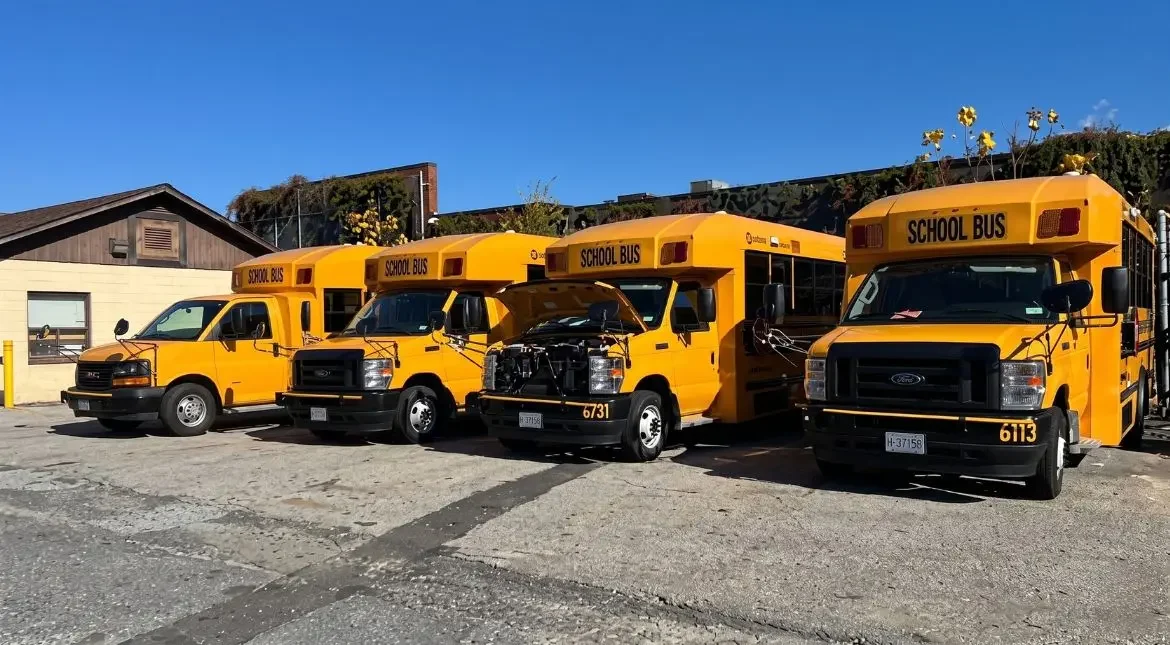
New Jersey is one of the most active EV school bus markets in the U.S., backed by strong funding and policy support. The NJDEP Electric School Bus Grant Program has already awarded over $32M to 14 districts, funding 48 buses and charging infrastructure, with a focus on overburdened communities. The state also follows Advanced Clean Trucks standards and requires NJ Transit to move away from diesel buses.
For school districts, the main challenge isn't funding availability but choosing the right deployment strategy. Endera's Type A buses — the Endera 4, 5, and 6 — are available in ICE and electric configurations, built in Ohio and designed to fit a range of New Jersey route needs from dense northern districts to smaller southern fleets starting electrification. New Jersey's funding is there — make sure your district is positioned to use it.
Contact Endera's sales team today to build a deployment strategy before the next award cycle closes.

New Jersey's School Bus Funding Landscape: What's Actually Available
The NJDEP Electric School Bus Grant Program
The NJDEP Electric School Bus Grant Program provides up to $15 million per year over three years for New Jersey districts to replace diesel school buses with electric models, including charging infrastructure. Applications are accepted on a rolling basis, with awards made as funding becomes available.
At least half of program participants and funding must go to districts in low-income, urban, or environmental justice communities — a structure that benefits many of New Jersey's urban and overburdened suburban districts disproportionately. In the most recent award cycle, East Orange School District received $1.7 million for five electric buses and three charging stations; West Windsor-Plainsboro Regional received up to $2.1 million for six buses and six fast-charging stations.
Charge Up NJ and the 30C Deadline
New Jersey's Charge Up NJ On-Road Vehicle Electrification Program supports medium and heavy-duty vehicle electrification including school buses, with applications reviewed on an ongoing basis as funding becomes available. The federal 30C charging equipment tax credit — up to $100,000 per installed charging port — expires June 30, 2026, and is the most time-sensitive federal tool available to New Jersey districts planning depot charging installations.
Equipment must be physically placed in service by that date, not just purchased or permitted. Endera's financing and grant advisory team helps NJ districts coordinate the NJDEP application, the 30C installation timeline, and any applicable EPA Clean School Bus Program funding so no program window is missed.
What an NJ District Actually Pays Per Bus
Breaking Down the Real Grant Math
Most discussions of New Jersey's school bus electrification focus on total program funding — $15M annually, $32M awarded — but procurement decisions are made at the per-bus level. According to the U.S. Department of Energy's Alternative Fuels Data Center, NJDEP grants range from approximately $270,000 to $320,000 per bus including charging infrastructure, with awards up to $350,000 for overburdened districts using bi-directional charging.
These amounts are explicitly designed to cover the incremental cost difference between electric and diesel buses plus infrastructure — not the full vehicle purchase price.
What That Looks Like in Practice
| Scenario | Approximate Cost |
|---|---|
| Diesel Type A bus | $90K–$120K |
| Electric Type A bus | $300K–$400K |
| NJ EIP grant offset | $270K–$350K |
| Net cost (overburdened district) | Near cost parity with diesel |
| Net cost (standard district) | Premium, but significantly reduced |
The result: EV adoption in New Jersey isn't about absorbing a full price increase — it's about whether a district can capture enough grant funding to neutralize the gap. For overburdened districts that qualify for the maximum award tier, the effective per-bus cost can reach near parity with a diesel alternative. For standard districts, a meaningful premium remains, but it's a fraction of the unsubsidized sticker difference.
Endera's grant advisory team works with NJ districts to confirm eligibility, prepare applications, and align vehicle selection with funding timelines — turning multi-million-dollar program headlines into the per-bus numbers that actually drive procurement decisions.
The Endera Type A Lineup for New Jersey Districts
Three Models for NJ's Range of School Transportation Needs
The Endera 4, 5, and 6 cover 14 to 30 passengers across 4 to 6 section configurations, with options for standard seating, ADA-compliant wheelchair lifts, and storage layouts tailored to special education and general student transport.
New Jersey's densely populated districts — particularly in the northeast corridor and urban communities — use Type A buses heavily for special education routes where shorter, more predictable daily mileage makes them ideal EV candidates. The configurability of Endera's lineup, driven by manufacturing the body and powertrain under one roof, means districts can specify the exact floor plan their student population requires.
ICE Still Has a Place in NJ's Fleet Strategy
Not every New Jersey district is ready to go fully electric on every route. Districts building mixed fleets — deploying electric on their most predictable, shorter routes while maintaining ICE or propane on longer or more variable runs — benefit from a manufacturer that supports all fuel types on the same platform.
Endera's Type A lineup offers ICE, propane, CNG, and electric configurations across the Endera 4, 5, and 6, on both Ford and Chevrolet cutaway chassis. That flexibility allows NJ districts to electrify at a pace that matches their infrastructure readiness rather than forcing a configuration mismatch between vehicle capability and charging reality.
Real-World Charging and Route Compatibility for NJ Operations
New Jersey's Dense Geography Works in EV's Favor
New Jersey's compact geography and relatively dense depot infrastructure make it one of the more EV-compatible school bus markets in the Northeast. Most special education and general Type A routes in NJ cover short, predictable daily distances — well within the operating range of Endera's electric Type A lineup with overnight depot charging. Federal guidance consistently identifies shorter, more predictable routes as the ideal first candidates for electrification, and that profile describes a significant share of New Jersey's Type A use cases.
Depot Charging Is Still the Operational Backbone
New Jersey has a dense public charging network, but for fleets it’s still a supplement—not a primary solution. Depot charging remains the reliable option, allowing vehicles to charge on a controlled schedule aligned with daily dispatch needs.
Endera’s turnkey depot charging services cover site assessment, equipment, and installation alongside vehicle deployment. For NJ districts using the 30C credit, this helps ensure projects are completed within the June 2026 deadline.
Total Cost of Ownership for New Jersey Districts
What the Numbers Look Like With NJ's Funding Stack Applied
Electric school buses have higher upfront costs than ICE alternatives, but New Jersey's funding stack compresses that gap significantly. A district receiving NJDEP grant funding plus 30C charging credits can reduce the effective day-one cost of an EV deployment — vehicle plus infrastructure — to a point where the long-term operating savings from lower fuel and maintenance costs accelerate the return on investment considerably.
The Electric School Bus Initiative documents that electricity is cheaper and more price-stable than diesel, and that maintenance costs drop substantially with fewer moving parts, no oil changes, and no exhaust system.
Planning Around the Cash Flow Gap
Even with NJ's programs applied, the upfront cost remains higher than ICE for districts without grant coverage. The honest challenge: NJDEP grants are awarded competitively and not every district receives funding in every cycle. For districts waiting on an award,
Endera's financing and leasing options provide a path to deploy now without waiting — capital leasing in particular allows districts to use vehicles while preserving capital for other operational needs. The goal is to avoid a scenario where an aging diesel bus is kept running past its useful life simply because the next grant cycle hasn't opened yet.
New Jersey's Funding Window Is Open — Don't Wait for a Better Cycle
New Jersey has built one of the most active school bus electrification funding environments in the country, and the districts that move now — with NJDEP grants actively being awarded and the 30C charging credit expiring in June 2026 — are in the strongest financial position. Endera's Type A lineup, grant advisory capacity, and turnkey infrastructure services are built to help NJ districts move through that window efficiently, not scramble to catch up after the deadline passes.
The funding cycle won't reset at a higher level. Contact Endera's sales team today to find the right Type A configuration and funding strategy for your New Jersey district.
FAQs
What state funding is available for New Jersey districts buying electric school buses?
The NJDEP Electric School Bus Grant Program provides up to $15 million per year for electric bus purchases and charging infrastructure, with rolling applications and priority for overburdened community districts. The Charge Up NJ program supports MDHD electrification including school buses. Endera's financing team assists districts with identifying and applying for all applicable programs.
Which Endera Type A models are available for New Jersey districts?
The Endera 4, 5, and 6 are all available in ICE, propane, CNG, and full electric configurations, with ADA-accessible layouts for special education transport. Both Ford and Chevrolet cutaway chassis are available.
What is the 30C charging credit deadline for NJ districts?
The 30C tax credit — up to $100,000 per installed charging port — expires June 30, 2026. Equipment must be physically placed in service by that date. New Jersey districts planning depot charging installations should engage Endera's team early to ensure the installation timeline is achievable.
Do Endera buses qualify for NJDEP grant funding?
Endera's electric Type A buses are eligible as qualifying zero-emission replacements for diesel school buses under the NJDEP program. Districts should confirm eligibility requirements with NJDEP directly and engage Endera's grant advisory team for application support.
Do Endera buses comply with Buy America requirements?
Yes. With approximately 65% of components sourced domestically, Endera's manufacturing supports Buy America compliance for federally funded New Jersey procurement contracts.
Can New Jersey districts run mixed ICE and EV fleets from Endera?
Yes. The Endera 4, 5, and 6 are available in ICE, propane, CNG, and electric configurations, all on the same platform. Districts can deploy electric on eligible routes while maintaining ICE or propane configurations elsewhere, with consistent parts availability and maintenance procedures across the mixed fleet.
Where are Endera Type A buses manufactured?
All Endera Type A school buses are built at the company's Ottawa, Ohio facility — a 250,000-square-foot plant where EV integration and body construction happen under one roof, supporting Buy America compliance for federally funded NJ contracts.