
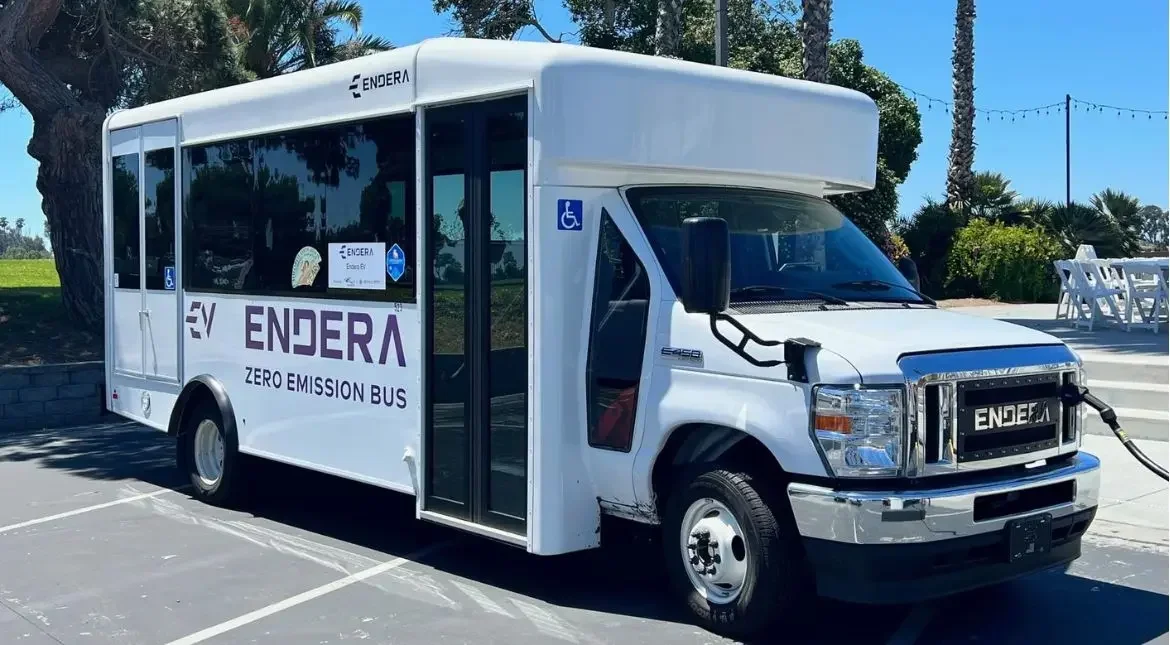
Guest Transportation Is Part of the Guest Experience
The Vehicle Is the First and Last Impression
For most hotel guests, the shuttle is the first and last physical touchpoint of their stay, shaping first impressions and reviews. Delays, breakdowns, or poor ride quality quickly reflect on the entire property. Despite investment in branding and service elsewhere, shuttle fleets are often an overlooked weak point in the guest experience.
What Hospitality Fleets Actually Need From a Shuttle
Hotel and resort shuttle operations require more than standard vans, with high-frequency routes demanding durability, reliability, and strong guest-facing appearance. Endera’s B-Series shuttle line is designed for these conditions, offering ICE, propane, CNG, and electric options so operators can match vehicles to route needs and infrastructure rather than availability.
Running airport loops, property circuits, or event transport? Endera's team can help you match the right model to your property's routes and staging setup.
The B-Series Lineup: Models and Where Each One Fits
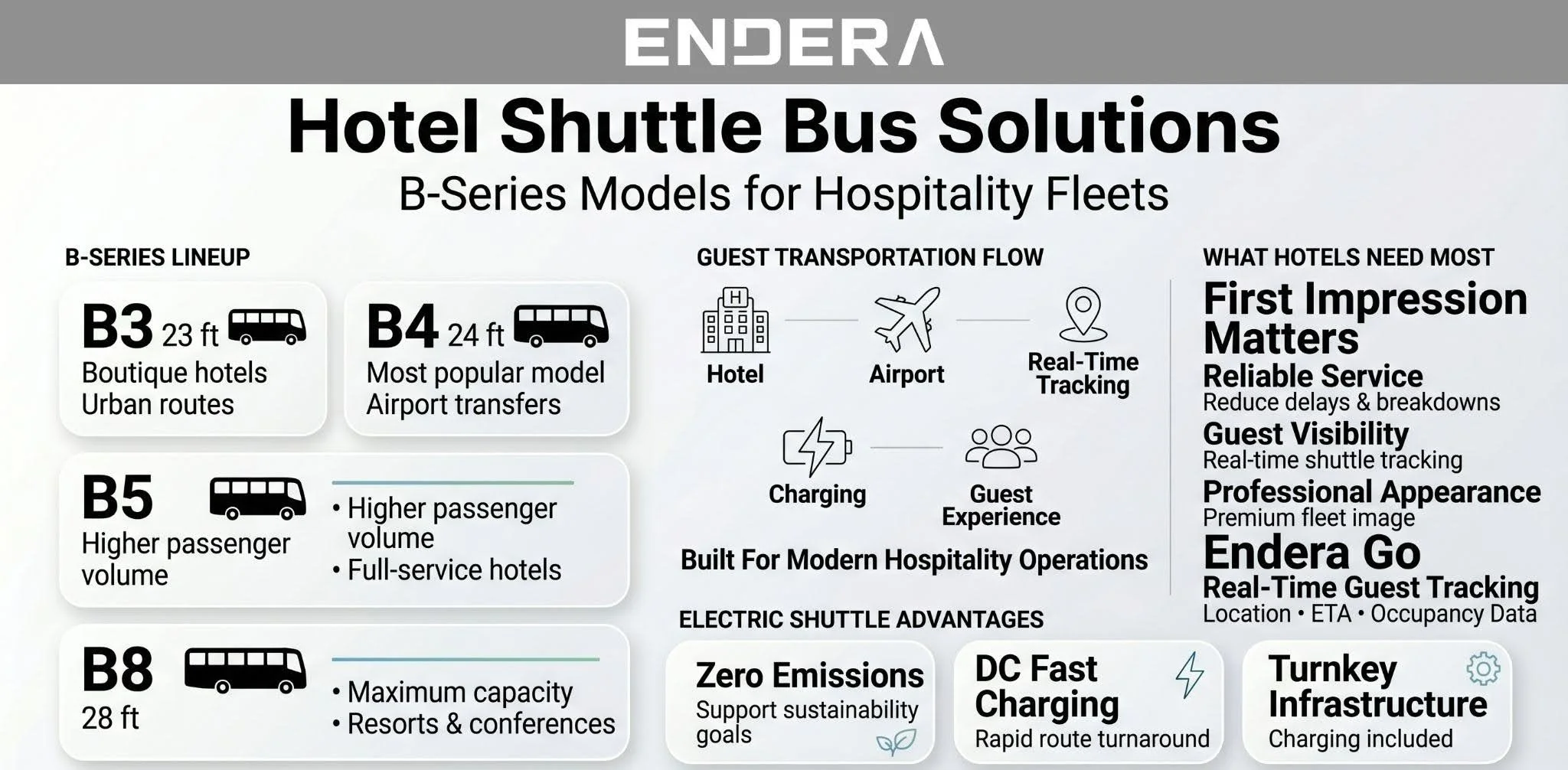
B3 and B4: Tighter Footprints, Urban and Boutique Operations
The B3 is Endera's 23-foot model and the most maneuverable option in the lineup. It runs on an ICE powertrain and is built for hotel operations where route conditions are tight — dense urban drop-off lanes, older hotel driveways not designed for larger vehicles, or boutique properties where passenger volume per run is low and vehicle size needs to stay proportional. It's not the right vehicle for a 200-room full-service resort running continuous airport loops, but for a downtown hotel handling moderate volume with limited staging space, the B3 earns its place.
B4: The Most Deployed Model in Hospitality
The B4 is Endera's 24-foot model and the most widely used configuration in the hospitality sector, available in both ICE and electric powertrains. It covers the broadest range of hotel and resort use cases — airport transfers, property loops, local attraction runs, and event transport — without requiring a CDL in most configurations, which matters operationally when hiring and scheduling drivers.
The electric B4 has undergone rigorous independent durability testing, earning a score of 90.1 on the Altoona Bus Testing Program — the highest score in its class. That certification is relevant beyond municipal procurement; it gives hospitality fleet managers documented, third-party evidence of long-term vehicle reliability before committing to a multi-unit purchase.
B5 and B8: Higher Capacity for Larger Properties
The 25-foot B5 handles higher passenger loads and comes in ICE and electric variants, making it ideal for full-service hotels running frequent airport loops. Six B5 units are currently deployed at the Illumina corporate campus, demonstrating its high-frequency performance. The 28-foot B8 is ICE-only and designed for maximum capacity, suited for conference hotels and resorts with heavy group transport demand.
Electric Shuttle Options for Hospitality: What's Changed
The Operational Case for Electric in a Hotel Setting
Hotel shuttle routes are strong candidates for electrification due to short, predictable trips and depot-based charging between runs. EV shuttles also support sustainability goals with zero-emission operations that guests can visibly recognize. Sheraton San Diego Hotel & Marina adopted this approach with three Endera electric shuttles for airport and local routes, aiming to cut emissions while improving ride quality.
Infrastructure and Charging for Hotel Fleets
The transition to electric shuttles is a vehicle decision and an infrastructure decision simultaneously. A hotel adding one or two electric B4s to an existing ICE fleet needs to understand what its staging area can support before ordering.
Endera's turnkey charging infrastructure service covers site assessment, charger procurement, and installation as part of the EV offering, so hospitality operators aren't coordinating two separate vendor relationships to get the system running. DC fast charging is standard across Endera's electric vehicles, which supports the turnaround times a hotel shuttle route requires — a vehicle that needs four hours to recharge isn't viable on a 30-to-40-minute loop schedule.
Software and Passenger Visibility: Endera Go
Real-Time Tracking as a Guest-Facing Feature
One of the friction points in hotel shuttle operations is the guest experience at the pickup point. Guests waiting curbside without any information about when the next shuttle arrives experience that wait as longer than it is and interpret it as disorganization. Endera Go addresses this directly — it's the passenger-facing component of Endera's software stack, providing real-time vehicle location, estimated arrival times, and occupancy data accessible to guests waiting for pickup. For a hotel operating an airport shuttle on a 30-to-40-minute rotation, the ability to tell guests exactly where the shuttle is and when it will arrive reduces perceived wait time and removes a common source of guest friction that has nothing to do with how well the vehicle is running.
Dispatch for Fleet Managers
Endera Dispatch gives operators real-time visibility into vehicle health, route performance, and EV state-of-charge in a single platform. For hospitality teams managing small shuttle fleets, this reduces complexity versus using multiple disconnected systems. Because it’s built alongside the vehicle hardware, data flows directly from bus to platform without third-party telematics.
Regulatory Considerations for Hospitality Fleet Operators
FMCSA and Insurance Requirements
Hotel shuttle operations that cross state lines or operate as for-hire services fall under FMCSA passenger carrier regulations. Vehicles carrying 16 or more passengers including the driver are subject to a $5 million minimum insurance requirement; vehicles carrying 15 or fewer require at least $1.5 million in coverage.
Most single-property hotel shuttle operations running fixed airport and local routes are not classified as for-hire carriers, but properties operating multi-location shuttles or contracted transportation services should confirm their classification with legal counsel before procurement. The distinction affects insurance requirements, driver qualification standards, and vehicle inspection obligations.
CDL Requirements and Fleet Staffing
For most hospitality operations, keeping vehicle passenger capacity below the CDL threshold is an operational preference as much as a regulatory one — a larger CDL driver pool means more flexibility in scheduling and fewer staffing complications when routes need to be covered on short notice. Endera's B3, B4, and B5 models are configurable at or below CDL thresholds in most states depending on seating layout, giving hospitality operators the capacity they need without the staffing overhead that comes with requiring a commercial driver's license for every shift.
Why Vertical Integration Matters for a Hospitality Fleet Purchase
One Vendor for the Vehicle and Everything Around It
Traditional shuttle procurement often involves multiple vendors—chassis, body, electrification, telematics, and charging—each with separate contracts and support channels. Endera consolidates the vehicle build, software, and charging infrastructure, with production in its Ohio facility and chassis partnerships with Ford and GM. For hospitality teams without dedicated fleet departments, this single point of contact simplifies maintenance, service, and issue resolution.
Composite Body Construction and Long-Term Appearance
Hotel shuttles are judged on appearance in a way that municipal transit buses aren't. A vehicle that looks weathered after two years of airport runs is a liability for a property that's invested in presenting a consistent brand image. Endera builds its B-Series with a composite shell — light, durable, and tested for resistance to salt and water exposure before installation. This matters for coastal properties like the Sheraton San Diego, where proximity to marine air accelerates corrosion on conventional body materials. It also matters for any operation where the vehicle's exterior condition reflects on the property it serves.
A Hotel Shuttle Fleet Should Be as Deliberate as the Property Itself
The right shuttle fleet for a hospitality operation is one that was chosen with the same care as the lobby furniture — sized correctly for the routes, built to last the service cycle, and supported by a manufacturer that understands what a breakdown at 5 AM during peak check-out means for a property's reputation. Endera's B-Series lineup gives hospitality operators a range of configurations across multiple powertrain options, with software, charging infrastructure, and ongoing service support built into the same relationship.
Reach out to Endera's sales team to discuss which B-Series model fits your property's routes, passenger volume, and infrastructure — and find out what's currently available for your fleet.
Frequently Asked Questions
1. Which Endera B-Series model is best for a hotel airport shuttle?
The B4 is the most widely used model in hospitality airport shuttle operations. At 24 feet, it covers the capacity and maneuverability requirements of most hotel airport routes without requiring a CDL in most states. It's available in both ICE and electric powertrains, and the electric variant has been independently validated through Altoona Bus Testing with a score of 90.1 — the highest in its class. Larger properties with higher passenger volume may prefer the B5, while boutique operations with limited staging space often opt for the B3.
2. Does Endera offer electric hotel shuttle buses?
Yes. The B4 and B5 are both available in electric variants. Endera also provides turnkey charging infrastructure — site assessment, charger procurement, and installation — as part of its EV offering, so hospitality operators handle the vehicle and charging setup through one vendor relationship rather than two.
3. What is Endera Go and how does it improve the guest shuttle experience?
Endera Go is the passenger-facing component of Endera's software platform. It provides guests with real-time shuttle location, estimated arrival times, and occupancy data. For hotel operations running 30-to-40-minute airport loops, this visibility reduces perceived wait time and removes a common source of guest friction at the pickup point.
4. Do hotel shuttle bus operators need a CDL?
CDL requirements depend on vehicle passenger capacity and vary by state. Most hotel shuttle operations keep vehicles configured below the CDL threshold to maintain scheduling flexibility. Endera's B3, B4, and B5 models are configurable to accommodate this in most states. Operators should confirm their state's specific threshold before finalizing configuration.
5. Which hotels are currently running Endera electric shuttles?
Sheraton San Diego Hotel & Marina partnered with Endera in 2024 for three electric shuttle buses serving airport transfers and local attraction routes. The deployment was designed to support the property's sustainability commitments while improving the comfort and consistency of guest ground transportation.
6. How does Endera's composite body construction benefit a hospitality fleet?
Endera's B-Series uses a composite shell that is lighter than conventional body materials and tested for salt and water resistance before installation. For coastal properties or any operation where the vehicle's exterior appearance reflects on the property's brand, the composite body holds up better over the vehicle's service lifecycle than traditional alternatives.
7. Can Endera configure a shuttle with luggage storage for airport transfers?
Yes. The B-Series floor plan is configurable to include luggage racks and dedicated storage areas appropriate for airport transfer operations. Configuration options are discussed during the sales and order process, allowing hospitality operators to spec the interior around their specific operational needs rather than adapting a fixed production template.