
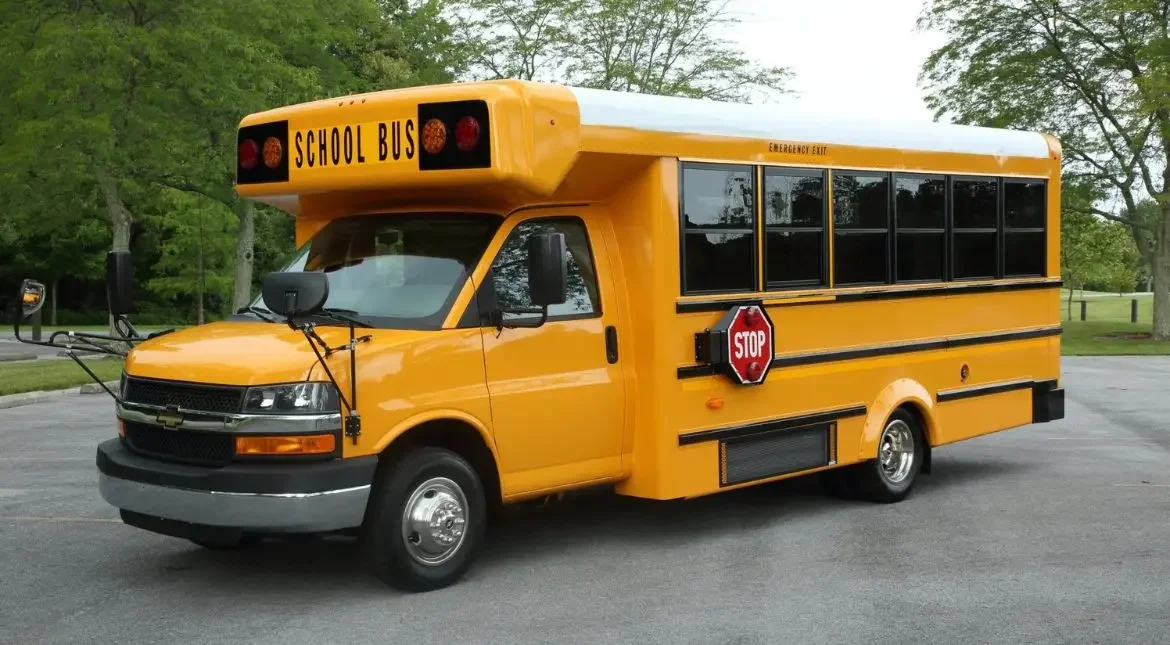
School bus yellow is one of the most recognized colors in American transportation — and one of the most misunderstood from a regulatory standpoint. Most buyers assume the color is federally mandated at the point of manufacture. It isn't. The requirement operates differently, and that distinction determines when yellow is non-negotiable and when a custom color is a legitimate option.
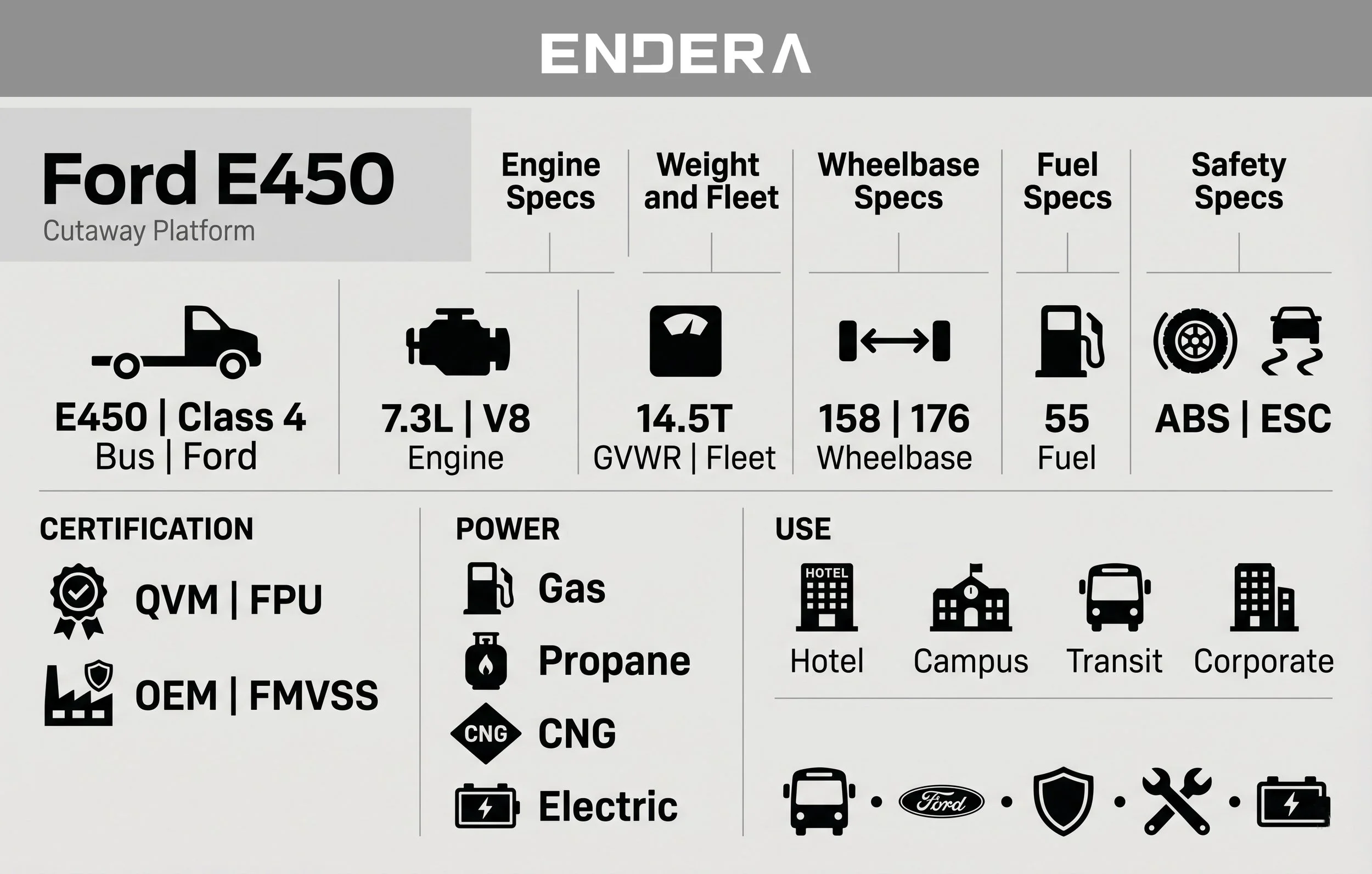
Endera builds Type A school buses in standard National School Bus Glossy Yellow for public district and charter school use, and in custom colors for private operators, churches, camps, and commercial fleets. Both configurations are built on the same Ford E450 and Chevrolet Express cutaway platforms with the same safety engineering — the color is a finishing decision, not a structural one.
Have questions about color requirements for your specific use case? Reach out to Endera's sales team today to get clarity before you spec the build.
Why School Buses Are Yellow: The 1939 Standard
The color now known as National School Bus Glossy Yellow traces to a 1939 conference organized by educator Frank W. Cyr at Columbia University, attended by officials from all 48 states. From 50 color samples, attendees selected an orangish-yellow — then called National School Bus Chrome — for its superior visibility at dawn and dusk, the two periods when students are most frequently in transit.
The color works because of how the human eye processes it. School bus yellow (Federal Standard 595a, Color 13432) stimulates both the eye's red and green photoreceptors simultaneously, producing stronger peripheral detection than a pure yellow or orange alone. It remains the most visible vehicle color in low-light and foggy conditions — which is why it has remained unchanged for over 85 years despite periodic proposals to update it.
Is Yellow Actually Required by Federal Law?
The answer is more precise than most buyers realize. According to NHTSA's school bus regulations guidance, federal law does not require school buses to be painted yellow at the manufacturing level. No Federal Motor Vehicle Safety Standard mandates the color. A manufacturer can legally produce and certify a school bus in any color without violating federal manufacturing law.
The color requirement applies at the operational level, not the production level. Under NHTSA Highway Safety Program Guideline No. 17, all vehicles operating as school buses — transporting students to and from school or school-related events — should be painted National School Bus Glossy Yellow. Most states have codified this guideline into enforceable law, making yellow a legal requirement for student transport operations rather than a manufacturing standard.
When Custom Colors Are Permitted
The operational distinction creates a clear framework for when custom colors are allowed. Buses that do not operate as school buses — meaning they don't transport students on regulated school routes — are not subject to the yellow requirement. This covers a wide range of buyers whose vehicles look like school buses but serve different purposes.
Churches, youth groups, and commercial operators can utilize custom colors for Type A buses since they do not operate under school bus designations. Endera also provides custom colors for private schools and corporate buyers seeking the safety of a Type A bus without the yellow identification. Per NHTSA guidance, any bus not used for student transport should be painted a color other than National School Bus Glossy Yellow, as the color signifies the vehicle's operational role rather than its platform.
State-Level Color Requirements: What to Verify
While federal manufacturing law doesn't mandate yellow, most states have adopted and enforced the color standard for any vehicle operating as a school bus within their jurisdiction. California's regulations, for example, require that school bus exteriors be National School Bus Glossy Yellow with limited black trim. Connecticut statute similarly mandates uniform yellow coloring, black lettering, and specific safety markings for school bus identification.
The practical implication for buyers is that state law — not federal manufacturing code — determines whether a yellow exterior is required for their specific operation. Districts and transportation contractors purchasing for regulated student routes should confirm their state's exact color requirements with their state education agency or DOT before finalizing a specification. Custom-color buyers should confirm that their use case falls outside the state's school bus designation threshold.
What Comes Beyond the Color: Full Safety System
School bus yellow is one element of a broader identification and safety system. A compliant school bus operating on student routes also requires flashing amber and red signal lamps, a stop arm, specific mirror configurations, and emergency exit equipment under federal FMVSS standards. The color works as part of this system — it signals the vehicle's presence; the lights and stop arm signal its operational status.
Endera's Type A school buses are engineered to meet or exceed federal FMVSS requirements across all of these systems, not just color compliance. For buyers assembling a compliant fleet for student transport, the full safety package — exterior identification, occupant protection, ADA lift configurations — is built into the production spec rather than added after delivery.
Standard Yellow vs. Custom Color: Choosing the Right Build
The right color choice comes down to one question: will this bus ever operate on a regulated school route transporting students? If yes, National School Bus Glossy Yellow is required in virtually every state. If no — churches, private camps, adult day programs, corporate group transport — custom color is a legitimate and often useful option that helps operators establish visual brand identity and clearly signal that the vehicle is not a school bus.
| Standard Yellow | Custom Color | |
|---|---|---|
| Required for | Public districts, charter schools, regulated student routes | Not applicable — operator's choice |
| Typical buyers | School districts, contracted transport operators | Churches, camps, private orgs, commercial fleets |
| State compliance | Required in virtually all states for student transport | Permitted when vehicle doesn't operate as a school bus |
| Stop arm & lights | Required in operation | Must be removed if bus is permanently repurposed |
| Same safety specs? | Yes | Yes — color is a finishing decision only |
Color, Configuration, and Compliance — Sorted Before You Sign
Endera's sales team can walk buyers through both standard and custom color configurations and confirm which specification applies to their intended use. Whether you're procuring for a public district that requires National School Bus Glossy Yellow or a private operator with different finishing requirements, the right call is to confirm before the build — not after.
Don't let a color question hold up your procurement. Contact Endera's sales team today to discuss color options, powertrain configurations, and current build availability for Type A models.
Frequently Asked Questions
What exactly is "National School Bus Glossy Yellow" and where does the standard come from?
National School Bus Glossy Yellow is a precisely formulated color designated as Color 13432 in the U.S. General Services Administration's Federal Standard 595a color collection. It was standardized in 1939 following a national conference organized by educator Frank W. Cyr at Columbia University. The color was selected from 50 candidates for its superior visibility in low-light conditions — specifically dawn and dusk — when students are most frequently in transit near roadways.
Can a manufacturer legally sell a non-yellow school bus?
Yes. According to NHTSA, no Federal Motor Vehicle Safety Standard requires school buses to be painted yellow at the manufacturing level. A manufacturer can produce and certify a bus in any color without violating federal manufacturing law. The yellow requirement is an operational standard — it applies to vehicles operating as school buses transporting students, not to the manufacturing or sale of the vehicle itself.
Which states legally require yellow for school buses in operation?
Most U.S. states have codified the NHTSA guideline requiring National School Bus Glossy Yellow for vehicles operating as school buses. California regulations specifically require this color with limited black trim; Connecticut statute mandates yellow with black lettering and safety markings. Buyers should verify their specific state's requirements with the state education agency or department of transportation, as enforcement and exact specifications vary by jurisdiction.
Does Endera offer factory paint in custom colors for Type A buses?
Yes. Endera builds Type A buses in custom colors for buyers whose vehicles will not operate as school buses under state law — including churches, private camps, youth organizations, and commercial group transport operators. Custom-color builds are available across gasoline, propane, CNG, and electric powertrain configurations. Contact Endera's sales team at (419) 796-6080 to discuss color options and confirm that your intended use case qualifies for a non-yellow specification.
What safety equipment beyond color is required on a school bus in operation?
A compliant school bus operating on student routes requires amber and red flashing signal lamps, a stop arm, specific exterior mirror configurations, emergency exits, and occupant protection systems meeting FMVSS standards. The yellow color is one component of this broader identification and safety system — it establishes visual presence, while the lights and stop arm signal active loading and unloading status. Endera's Type A school buses are built to meet or exceed these federal standards across all systems.
If a school bus is repurposed for non-student use, does it need to be repainted?
NHTSA guidance specifies that any school bus permanently converted for use other than transporting children to and from school or school-related events should be painted a color other than National School Bus Glossy Yellow, and should have its stop arms and school bus signal lamps removed. This requirement prevents non-school vehicles from being visually misidentified as school buses in traffic — a safety concern for other drivers who respond differently to school bus identification signals.
Do Endera's custom-color Type A buses carry the same structural and safety specifications as yellow models?
Yes. Color is a finishing decision applied at the end of the production process and does not affect the structural engineering, safety systems, or powertrain specifications of the vehicle. Endera's custom-color Type A buses are built on the same Ford E450 and Chevrolet Express cutaway platforms with the same FMVSS-compliant body engineering, ADA lift options, and powertrain configurations as standard yellow models. The vehicle warranty applies equally to both.