
Summer Camp Transportation Is a Safety and Operations Decision Made Before the Season Starts
Why Vehicle Choice Matters More Than Most Camp Directors Realize
The vehicle a summer camp program puts youth in is one of the most consequential decisions an organization makes before the season opens. It affects safety, insurance, regulatory compliance, and what happens operationally when a vehicle breaks down 45 minutes into a field trip. Camps that have historically relied on 15-passenger vans because they're cheaper at purchase often discover the full cost later — through insurance requirements, state restrictions, and the safety record of those vehicles documented across decades of federal safety research.
Where Endera Fits
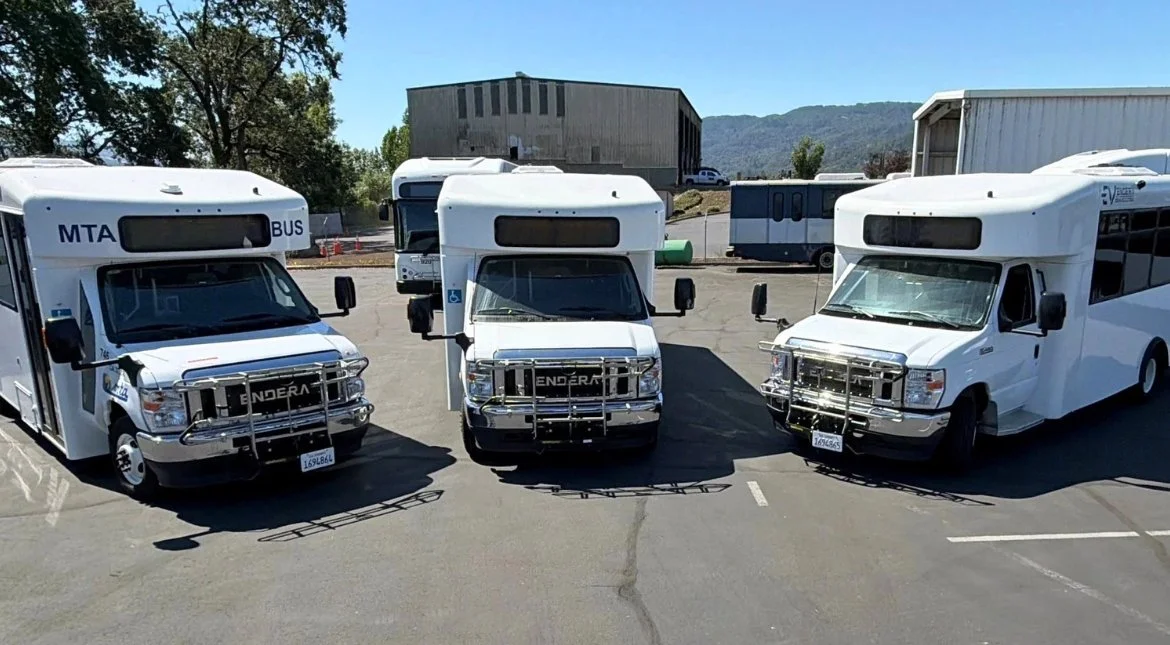
Endera builds Type A school buses — the Endera 4, 5, and 6 — in configurations that fit the seasonal, moderate-volume, and field-trip-heavy operational profiles of summer camp and youth program fleets. The vehicles are built to the same structural safety standards as school buses used in public districts, on a platform that seasonal operators can own, finance, or arrange through dealer partners without navigating the complexity of a public procurement process.
Running a camp or youth program and thinking through your transportation setup? Endera's team can help you work through the right configuration, powertrain, and funding options for your season.
The 15-Passenger Van Problem in Youth Transport
What Federal Law and State Rules Actually Say
Federal law under SAFETEA-LU prohibits schools from purchasing new 15-passenger vans for student transportation unless those vans meet federal school bus safety standards — which factory-produced vans do not. The prohibition applies to schools specifically. Summer camps are not legally classified as schools under federal definitions, which creates a regulatory gray area that has led many camp programs to continue using large vans for youth transport.
Why Legal Use and Defensible Use Are Not the Same Thing
Many camp administrators begin the transportation discussion with a straightforward question: is it legal for our program to use a 15-passenger van? The more important question is often what happens after an incident: can we defend that decision if an injury occurs?
Federal Law Regulates Sale, Not Use
NHTSA notes that federal law primarily regulates the manufacture and sale of new vehicles — states establish their own operational requirements for student transportation, and liability questions are often determined under state law rather than federal vehicle-sale regulations. NHTSA specifically advises schools, transportation providers, and organizations moving children to consult attorneys and insurance carriers regarding liability concerns.
The Risk-Management Lens That Matters
That distinction matters because transportation risk is increasingly evaluated through insurance underwriting standards, organizational duty-of-care expectations, and post-incident legal review — not simply whether a vehicle was technically permitted to operate. A transportation decision can comply with minimum legal requirements while still creating significant additional scrutiny if a safer alternative was reasonably available.
NHTSA's Guidance on School Bus Safety Standards
NHTSA has consistently emphasized that school buses provide the highest level of protection for child transportation and strongly recommends that vehicles transporting children meet federal school bus safety standards. While camps are not always classified as schools under federal definitions, that regulatory distinction does not eliminate the broader risk-management question organizations face. For camp boards, nonprofit leadership teams, and risk managers, the transportation decision is increasingly judged through the lens of reasonable care, insurance exposure, and defensibility after an incident — not solely through the lens of federal minimum compliance.
The Type A Bus as the Practical Alternative
A Type A school bus built to federal school bus safety standards — including a fully welded roll cage framework, compartmentalization seating, emergency exits, and exterior lighting — is the vehicle that closes the safety gap the van creates. It costs more upfront than a van. It also doesn't carry the liability exposure, insurance surcharge, or state regulatory risk that large-van youth transport increasingly does. For camp directors and nonprofit youth program administrators making this evaluation, the total cost comparison looks different when insurance, state compliance, and risk management are included alongside the purchase price.
The Endera Type A Lineup for Camp and Youth Programs
Endera 4: Right-Sized for Smaller Programs
The Endera 4 is a 4-section Type A with a seating capacity that fits smaller youth programs, targeted pickup routes, and day camp operations where the number of campers per run is consistently in the lower range. It's the most maneuverable configuration in the school bus lineup and the right answer for camps that need a vehicle that fits residential streets, tight camp driveways, and parking areas at field trip destinations that weren't designed for larger buses.
Endera 5: The General-Purpose Camp Bus
The Endera 5 covers the mid-range capacity that most full-service camp programs need — enough seats for a standard activity group or a moderately full pickup route, without the footprint of the largest configuration. It is available in ICE, propane, CNG, and electric powertrains. For camps building their first owned bus into a fleet, the Endera 5 is typically the right starting configuration — versatile across daily routes, field trips, and property operations without being over-specified for any one use case.
Endera 6: Higher Capacity for Larger Programs
The Endera 6 carries the highest passenger capacity in Endera's Type A lineup and is the right answer for larger day camp programs running full-group field trips or residential camps that need to move a significant number of campers at once. Like the 4 and 5, it is available across all four powertrain options. Camps selecting the Endera 6 should confirm that their primary operating environment — including field trip destinations, camp access roads, and drop-off areas — accommodates the slightly larger footprint before finalizing the configuration.
ADA Configuration for Inclusive Programs
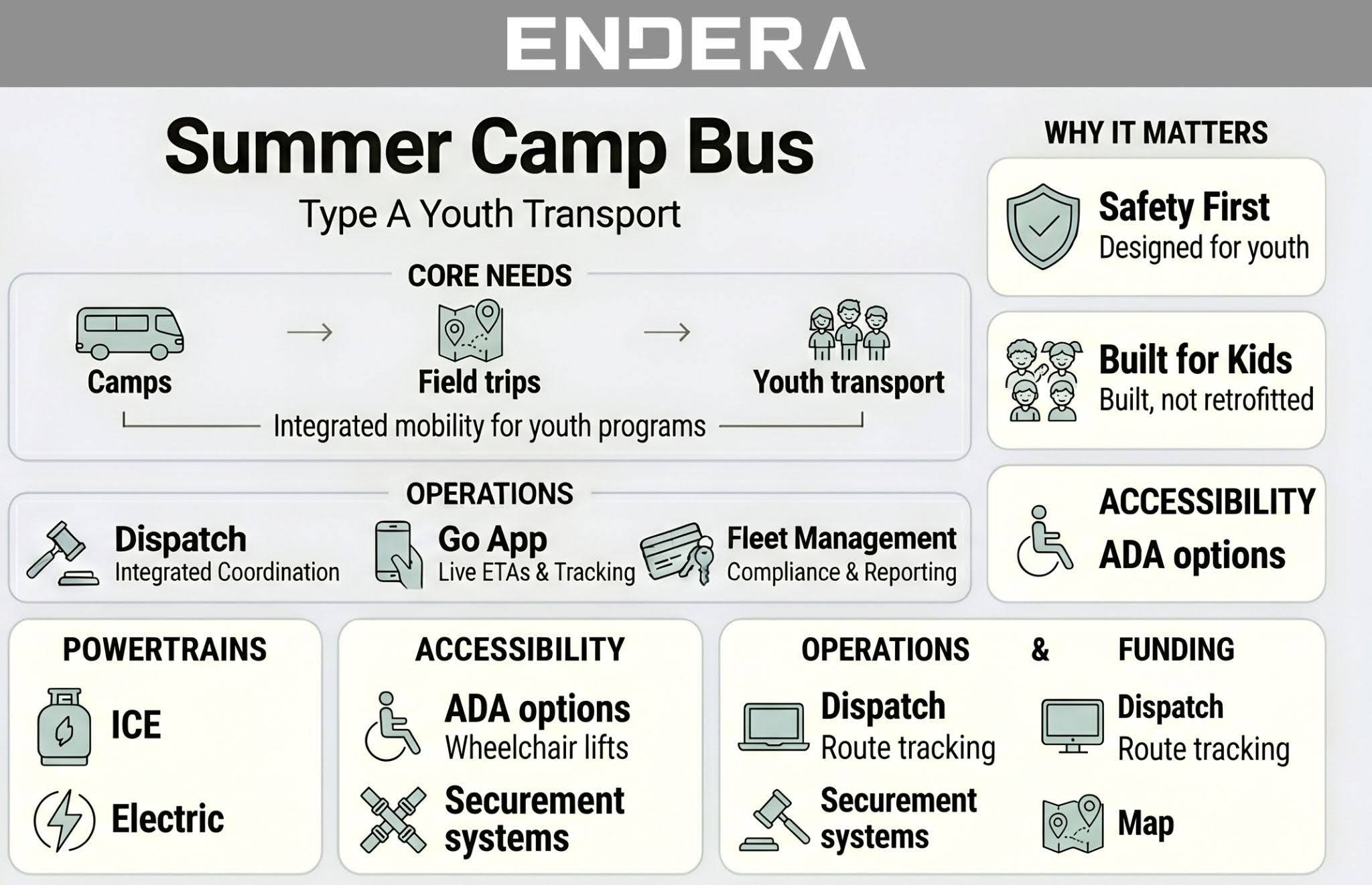
All three Endera models are configurable with ADA-compliant lifts and wheelchair securement systems — a necessary specification for camp programs serving participants with disabilities or operating under grant terms that require accessible transportation. The lift and securement positioning are engineered into the floor plan at the production stage, not added afterward, which is important for maintaining floor integrity and the structural coherence of the vehicle over a multi-season service lifecycle.
Powertrain Options for Seasonal Operators
ICE and Propane for Standard Camp Operations
Most camp programs that own their fleet run it seasonally — a concentrated period of high use followed by extended storage. ICE and propane powertrains are straightforward for this operating pattern: reliable cold-start performance, broad parts availability, and no charging infrastructure requirement. Propane offers lower per-mile fuel costs than gasoline with a simpler fueling logistics profile than CNG, making it a practical mid-point for camps that want to reduce operating costs without committing to an EV infrastructure investment.
Electric for Camps With the Right Infrastructure
Camps with on-site electrical infrastructure, fixed daily routes, and access to incentive funding have a real case for electric. The lower per-mile fuel cost and reduced maintenance overhead of an electric Endera 4 or 5 compound meaningfully over a fleet that runs intensively for two to three months per year and then sits — because the reduction in oil changes, brake service, and drivetrain maintenance applies to every operating hour. Camps in California, New York, and other states with active clean vehicle incentive programs should evaluate whether available funding reduces the effective purchase cost enough to make the economics work.
Grant Funding for Nonprofit Youth Programs
Nonprofit summer camp and youth program organizations may qualify for state and local clean vehicle incentive programs, EPA grant funding, and in some cases foundation grants specifically directed at youth-serving organizations upgrading transportation infrastructure. Endera's grant navigation support covers federal, state, and local funding identification and application assistance. Camps that engage early — before finalizing a procurement decision — get the most value from that process.
The Right Bus Makes Every Camp Day Run Better
Summer camp transportation that works is invisible — campers get picked up on time, field trips leave as scheduled, and nobody thinks about the bus until the next one. When it doesn't work, everything else in the program day gets harder. Endera builds Type A school buses in 4, 5, and 6 section configurations — with powertrain options, ADA accessibility, and integrated fleet software — designed to support the full range of what a camp or youth program needs its transportation to do over a full season and beyond.
Let Endera's sales team know about your program — routes, camper count, budget structure, and any funding your organization may qualify for.
Frequently Asked Questions
1. Can summer camps use Type A school buses instead of 15-passenger vans?
Yes — and for most camp programs, a Type A school bus is the safer and more defensible choice. Type A buses built to federal school bus safety standards provide structural protections, compartmentalization seating, and emergency egress that factory-produced 15-passenger vans do not. NHTSA has recommended that all youth transport meet school bus safety standards, and many state regulations and insurance carriers have moved to restrict or surcharge van use in youth programs regardless of federal minimums.
2. Which Endera model is best for a day camp with daily pickup routes?
The Endera 5 is the most versatile configuration for most day camp programs — enough capacity for a standard pickup route or activity group, maneuverable on residential streets, and available across ICE, propane, CNG, and electric powertrains. Smaller programs with consistently low passenger counts per run may find the Endera 4 a better fit. Larger programs running full-group field trips may prefer the Endera 6.
3. Are Endera school buses available with ADA-accessible configurations for inclusive programs?
Yes. The Endera 4, 5, and 6 are all configurable with ADA-compliant lifts and wheelchair securement systems. These accessibility options are built into the floor plan at the production stage rather than added afterward. Camp programs serving participants with disabilities or operating under inclusive program standards should confirm configuration details with the Endera sales team during the specification process.
4. What powertrain options are available for seasonal camp fleet operators?
All three Endera school bus models are available in ICE, propane, CNG, and electric powertrains. ICE and propane are the most common choices for seasonal operators without on-site charging infrastructure. Electric is a practical option for camps with fixed daily routes, on-site electrical access, and eligibility for clean vehicle incentive programs that reduce the effective purchase cost.
5. Can nonprofit camp organizations get funding to help purchase an Endera school bus?
Potentially, yes. Nonprofit organizations may qualify for state and local clean vehicle incentive programs, EPA grant funding, and other public funding depending on their organizational structure and state. Endera's grant navigation support helps camp administrators identify applicable programs and manage the application process. Organizations should engage with the Endera team early in the procurement planning cycle to maximize available funding options.
6. Does Endera offer financing options for camp and youth program organizations?
Yes. Endera offers capital leasing alongside direct purchase, allowing organizations to spread vehicle acquisition costs across a lease term rather than absorbing the full cost in a single budget year. This structure is useful for nonprofits and camp programs managing seasonal revenue cycles. Contact the Endera sales team to discuss options that fit your organization's financial structure.
7. How does the Endera school bus fleet software apply to a camp operation?
Every Endera school bus comes available with Endera Dispatch — providing real-time GPS tracking, geofence management, and route performance data from a single dashboard. For camp directors managing field trip departures, daily routes, and property operations, having live visibility into where each vehicle is at any point in the day reduces the management overhead of coordinating multiple buses and staff. Endera Go provides real-time ETAs for parents and program coordinators tracking pickup and drop-off timing.