
Mississippi school districts are running some of the oldest bus fleets in the country. For transportation directors managing tight budgets across rural counties — from the Delta to the Gulf Coast — an unexpected breakdown isn't just an inconvenience. It's a student left waiting on the side of the road, a driver without backup support, and a district scrambling to cover a route with equipment that was already past its service window.
Endera builds the Type A school bus from the ground up — powertrain, body, and software — at a single 250,000-square-foot facility in Ottawa, Ohio. There's no chain of upfitters, no split warranties, and no finger-pointing when something needs attention. Mississippi districts get one manufacturer accountable for the entire vehicle, from engineering through delivery.
Ready to optimize your routes? Contact Endera's fleet specialists today to design a custom configuration blueprint for your district.

The Endera Type A School Bus Lineup
Designed for Specialized and Small-District Routes
Endera's school bus line focuses on the Type A segment — the vehicle class most commonly used for special education transport, rural routes, and smaller district operations. These are the assignments where a reliable, right-sized bus matters more than a large one, and where an unexpected mechanical failure carries more operational weight. Building the complete vehicle under one roof means Endera can be held to one standard, rather than allowing accountability to diffuse across multiple vendors.
Three Models, Built to Your District's Needs
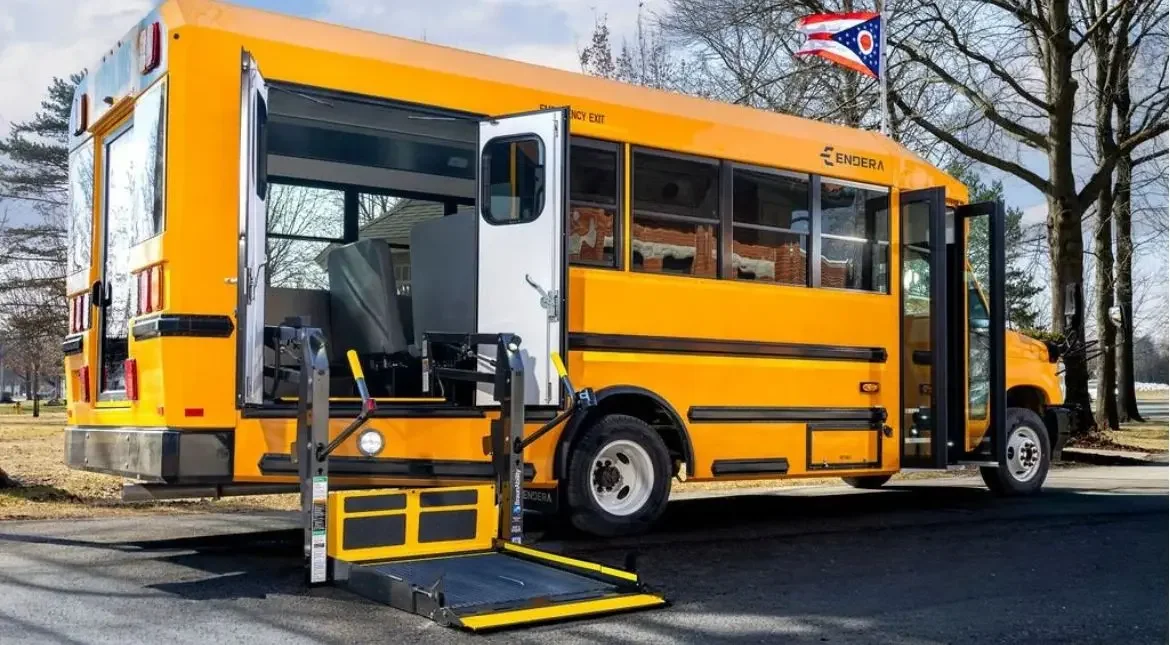
The Endera 4, 5, and 6 offer 4 to 6 section configurations, allowing districts to dial in seating capacity, ADA-compliant lift integration, and storage layout without waiting on a third party to retrofit the body after the fact. Because the entire vehicle is built in-house, those configurations are engineered into the manufacturing process — not bolted on afterward. A district that needs a specific floor plan for a wheelchair-accessible special education route gets it built in from the start.
Safety Standards That Go Beyond the Minimum
Every Endera school bus is built to exceed NHTSA school bus safety standards for structural integrity and student protection. The vertically integrated build process means every safety-critical component — from the frame to the high-voltage battery placement in EV models — is engineered for the specific dimensions and load distribution of the Endera body. For Mississippi districts replacing vehicles that were already overdue for retirement, that's a meaningful step forward.
Which Endera Model Fits Your Mississippi District?
Start With the Route, Not the Spec Sheet
Mississippi's school transportation landscape is defined by long rural corridors, significant heat and humidity, and districts that often cover substantial ground with limited resources. The right bus for a Hinds County suburban route looks different from the right bus for a Bolivar County Delta run stretching deep into unincorporated areas. Getting the configuration right means starting with the actual duty cycle — not a manufacturer's default spec sheet.
Suburban and Mid-Size District Routes
For districts in Jackson, Hattiesburg, or Tupelo running structured routes in the 60–100 mile daily range with centralized depot access, electric configurations are worth a serious operational look. Predictable routes support reliable overnight depot charging, and removing diesel exhaust from student pickup and drop-off zones is a genuine health improvement for students who make that trip every day. Mississippi's climate also works in favor of EV battery performance compared to colder northern states — warmer ambient temperatures mean less energy lost to battery conditioning.
Rural Delta and Long-Corridor Routes
For districts in the Mississippi Delta or rural south-central counties running longer daily mileage across flat but remote terrain, ICE, propane, or CNG configurations remain the practical choice for most operations today. Endera offers all of them — so districts aren't pushed into electrification before the infrastructure exists to support it. This isn't a reluctant concession; it's a deliberate part of the platform design that allows districts to make the transition on their own timeline without being left behind in the meantime.
A Path Forward Without Pressure
Districts don't have to go all-electric to work with Endera. The Endera 4, 5, and 6 are available across ICE, propane, CNG, and EV powertrains on the same platform, making it possible to electrify specific routes while keeping conventional fuel buses on runs where they make more operational sense. A district can put one or two EVs on a predictable suburban loop, measure the actual operating cost difference, and build from there — without committing the entire fleet before the local grid and depot are ready.
Mississippi's Fleet Replacement Pressure Map
"Old Buses" Isn't a Uniform Problem
Mississippi's school bus replacement challenge is often described in general terms, but the operational reality varies significantly by region. Vehicle age, duty cycle intensity, and environmental stressors differ sharply across the state, creating distinct replacement pressures rather than a single statewide issue. Understanding which category a district falls into matters for procurement planning, because the urgency and the right solution aren't the same in every county.
The Delta Region
In Bolivar, Sunflower, and Washington Counties, districts face some of the longest rural routes and lowest population density in the state. Extended corridors increase wear on drivetrains and suspension systems, and constrained capital budgets often push replacement timelines further out — compounding the problem year after year. Districts in this region frequently operate buses well past the point where maintenance costs have exceeded the depreciated value of the vehicle.
The Central Corridor and Gulf Coast
In Hinds, Rankin, and Madison Counties, higher route density creates a different strain profile. Buses run more frequent stop-and-go cycles across urban and suburban pickup patterns, accelerating brake wear and transmission stress even when total daily mileage stays moderate. Along the Gulf Coast — in Harrison, Jackson, and Hancock Counties — environmental exposure becomes the primary deterioration driver. High humidity, salt air, and coastal weather conditions accelerate corrosion of chassis components, underbody structures, and electrical systems, often shortening effective vehicle lifespan even when mileage is comparable to inland districts.
How Mississippi School Bus Procurement Actually Works
A State-Structured Process With Fixed Rules
Mississippi school bus procurement operates through a state-governed framework administered by the Mississippi Department of Education (MDE). Public school districts are required to purchase buses that meet MDE-approved minimum specifications, which are updated and published annually. Purchasing occurs through a state-managed process using MDE's approved school bus companies and pricing list — districts cannot simply buy off a manufacturer's website.
Understanding that framework is the starting point for any district planning a new purchase, because the rules around what's approved, when orders can be placed, and how funds are disbursed all operate on a defined cycle that doesn't wait for districts that come in late.
Bid Cycles, Timing Constraints, and the Purchase Form
Mississippi districts operate within defined procurement windows tied to the state bid calendar. The New School Bus Purchase Form — updated annually by MDE — governs new vehicle acquisition and must accompany all purchases.
Orders placed outside of approved bid cycles or without proper documentation can delay delivery significantly, sometimes by a full school year. Early coordination with both the state office and the bus manufacturer is not optional for districts that need vehicles by a specific start date. Endera's sales team works with districts ahead of procurement windows to confirm that vehicle configurations meet the current MDE minimum specifications, so there are no compliance surprises when paperwork is submitted.
Federal Funding Adds Another Layer
Many Mississippi districts supplement state transportation funding with federal sources — including Title I transportation support, IDEA funds for special education routes, and EPA Clean School Bus Program clean transportation programs. Each funding source carries its own eligibility requirements, documentation standards, and timelines. Districts that treat federal funding as an afterthought regularly find themselves ineligible for programs they could have accessed with earlier planning. Endera's grant advisory team helps districts map out which programs apply to their situation before the procurement window opens, not after.
Get Your Fleet Spec'd
Across every county in Mississippi — from the Gulf Coast to the Delta — school transportation directors are managing significant routes with aging equipment and limited backup. Endera's Type A school buses are built to be reliable, configurable, and supported by a team that understands how state procurement actually works and how to connect districts with the funding they've already earned. The combination of flexible powertrains, in-house customization, and a manufacturer accountable for the whole vehicle is what Mississippi's transportation directors have been looking for.
To discuss models, check availability, and find out what grant funding your district may already qualify for, contact Endera's sales team.
FAQs
Does Endera sell Type A school buses in Mississippi?
Yes. Endera sells new Type A school buses — the Endera 4, 5, and 6 — to Mississippi school districts. Models are available in ICE, propane, CNG, and electric configurations, with customizable seating layouts, ADA lift options, and section configurations to match each district's specific routes.
What powertrain options are available for Mississippi districts?
Endera offers ICE, propane, CNG, and fully electric powertrains across the Type A lineup. Districts can select the configuration that fits their current routes and infrastructure, with a clear path toward electrification as conditions allow.
How does Mississippi's state procurement process affect the purchase timeline?
Mississippi school bus purchases must align with MDE-approved specifications and the state purchase form process, which follows a fixed annual calendar. Endera recommends connecting with the sales team well before the relevant bid cycle opens to confirm specification alignment and prepare all required documentation in advance.
Are Endera school buses eligible for EPA Clean School Bus Program funding in Mississippi?
Yes. Endera's clean-fuel and electric school bus models align with EPA Clean School Bus Program eligibility. Endera's grant advisory team actively helps districts identify applicable funding and manages much of the application process directly.
Can Endera school buses accommodate ADA requirements?
Yes. The Endera 4, 5, and 6 support ADA-compliant configurations, including Braun wheelchair lift integration and accessible seating per FTA Part 37 requirements, built into the manufacturing process rather than added as aftermarket modifications.
Does Endera provide charging infrastructure for Mississippi districts going electric?
Yes. Endera provides end-to-end charging infrastructure support — site assessments, charger procurement, and full installation — as part of its EV offering. Districts work with one vendor for both the bus and the charging setup.
What fleet management tools come with an Endera school bus?
Every Endera school bus comes available with Endera Dispatch, providing real-time vehicle tracking, route performance data, and maintenance scheduling. It's built in-house and connects directly to the vehicle's hardware — no third-party integration required.